
VIETNAM · TRAVEL GUIDE
From Hanoi to the Mekong
Old streets, karst landscapes, imperial history, coastlines and river life.
Vietnam at a glance
Vietnam stretches for more than 1,600 kilometres from north to south. Allow 14 to 18 days for a first journey: Hanoi and Ninh Binh in the north, Huế and Hoi An in Central Vietnam, then Ho Chi Minh City and the Mekong Delta in the south.
Best time
Regional climates differ. February to April and October to early December can work well overall. Central Vietnam has a higher risk of heavy rain and flooding in autumn.
Route
Hanoi → Ninh Binh or Ha Long → Huế → Hoi An → Ho Chi Minh City → Mekong Delta. Use sleeper trains or domestic flights for the longest distances.
Getting around
Grab and reputable taxi firms are useful in cities. Buy rail tickets through Vietnam Railways or established agents and choose well-reviewed night-bus operators.

Hanoi, Ninh Binh and Ha Long
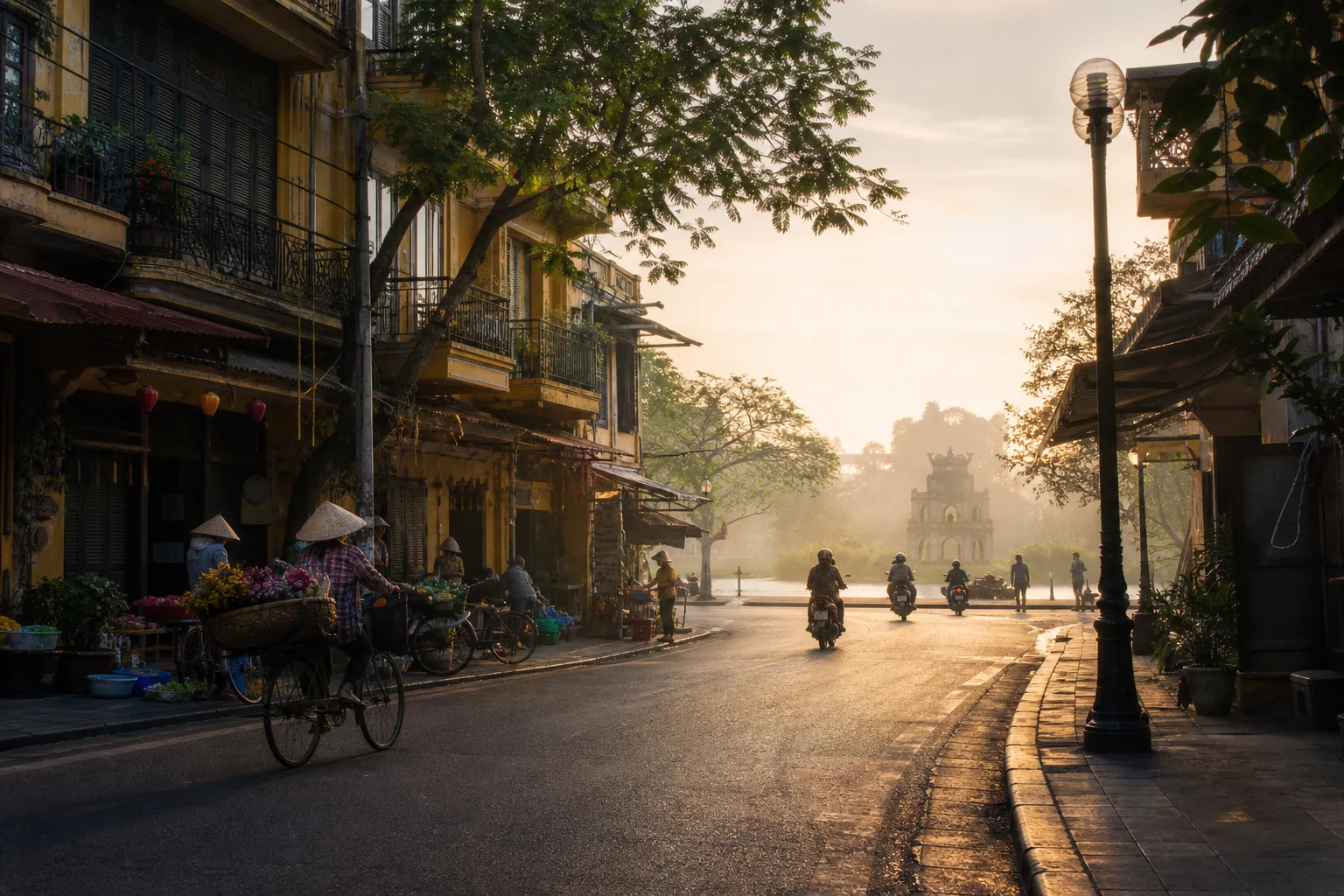
Hanoi combines old-quarter lanes, French-era architecture, temples and one of Asia’s most rewarding street-food cultures. Spend three or four nights around Hoan Kiem, the Temple of Literature, West Lake and early markets. Ninh Binh offers boat trips at Trang An or Tam Coc, cycling through rice fields and the Hang Mua viewpoint. For Ha Long, compare vessel standards, routes, weather and reputable operators; Lan Ha and Bai Tu Long often feel quieter.
Huế, Da Nang and Hoi An
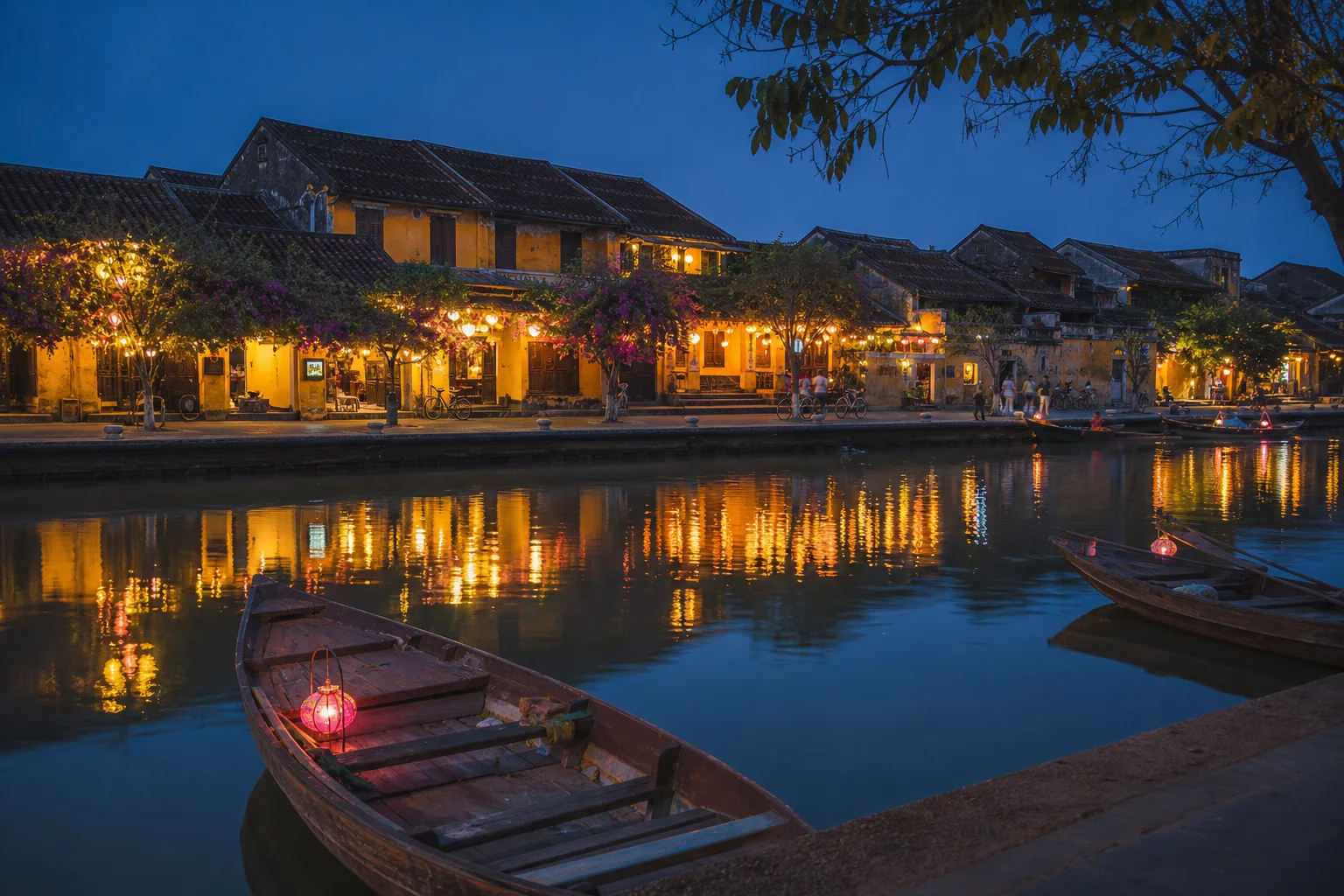
Huế tells the story of the Nguyễn dynasty through its citadel, royal tombs and pagodas. Cross the Hai Van Pass toward Da Nang and Hoi An. Explore Hoi An early, join a cooking class, cycle through Tra Que and visit An Bang or Cua Dai beach. Autumn typhoons, heavy rain and flooding can disrupt plans in Central Vietnam.
Ho Chi Minh City, the Mekong Delta and Phú Quốc
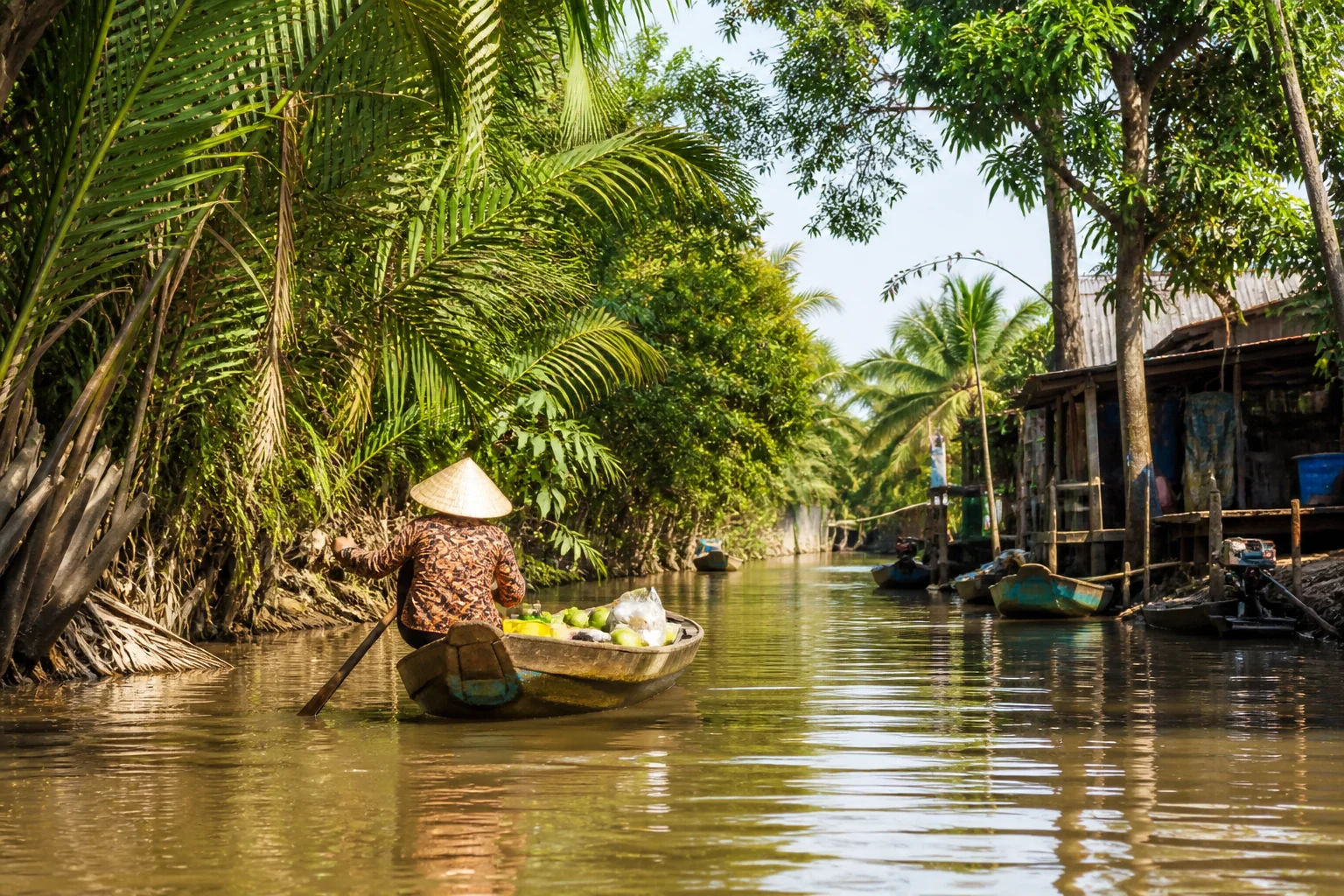
Ho Chi Minh City is Vietnam’s high-energy commercial centre. Explore Chợ Lớn, central architecture, modern cafés and its broad food scene. Spend at least one night in the Mekong Delta — Can Tho, Ben Tre or Vinh Long are useful bases. Phú Quốc can add several beach days, although development varies greatly across the island.
Food, restaurants and affordable shopping
- Hanoi: phở bò, bún chả, chả cá and egg coffee.
- Huế: bún bò Huế and small imperial-style dishes.
- Hoi An: cao lầu, white rose dumplings and mì Quảng.
- South: cơm tấm, bánh xèo and hủ tiếu.
Busy food stalls with high turnover are usually the best choice. For water, fruit and everyday supplies, look for WinMart/WinMart+, Co.opmart, GO!, Lotte Mart and Bach Hoa Xanh. Circle K and 7-Eleven are convenient but not always cheapest.
Typical daily budget
- Budget: around €35–60 with guesthouses, local food and bus or train travel.
- Comfort: around €80–150 with mid-range hotels, transfers and varied restaurants.
- Resorts, islands and peak periods cost more.
Safety and practical advice
Violent crime against travellers is rare, but pickpocketing and motorcycle bag-snatching occur. Carry bags away from traffic, avoid holding a phone beside the road, secure valuables on sleeper trains and never leave a passport as collateral. Road traffic is a major everyday risk; only ride a motorbike with the correct licence, insurance and helmet. Avoid demonstrations.
Current advice: Check the latest UK FCDO Vietnam travel advice, entry rules and regional weather warnings before departure.
Ideal 16-day itinerary
- Days 1–4: Hanoi.
- Days 5–6: Ninh Binh or Ha Long/Lan Ha.
- Days 7–8: Huế.
- Days 9–11: Hoi An and Da Nang.
- Days 12–14: Ho Chi Minh City.
- Days 15–16: Mekong Delta; add three nights for Phú Quốc.