
Bangkok, Northern Thailand and the right island at the right time
A complete guide for a well-planned Thailand journey, with itineraries, neighbourhoods, regional food, transport, island choices and practical safety advice.
Thailand at a glance
Best time
November to February is drier and slightly cooler in many regions. March and April are very hot. Rain patterns vary: plan the Andaman coast and Gulf islands separately.
Ideal length
Allow 14 days for Bangkok, the north and one beach region. With 18 to 21 days, add Khao Sok, a smaller island or a slower northern route.
Money & daily life
Thai baht. Cash still matters at markets and on islands; ATMs often charge fees. Small notes, offline maps and a local SIM or eSIM make travel easier.
Three balanced itineraries
| Route | Stops | Length |
|---|---|---|
| First Thailand trip | Bangkok 4 · Chiang Mai 4 · Krabi/Railay 4 · Bangkok 1 | 13–14 days |
| Culture & nature | Bangkok 3 · Ayutthaya 1 · Chiang Mai 4 · Khao Sok 3 · Koh Lanta 4 | 15–16 days |
| Gulf islands in summer | Bangkok 3 · Chiang Mai 4 · Koh Samui 3 · Koh Phangan or Koh Tao 4 | 14–15 days |
Less is more: combining Phuket, Krabi, Koh Samui and Koh Tao in two weeks creates unnecessary flight, bus and ferry days. Choose one coast.
Bangkok · 3 to 5 days
A practical sightseeing order
Visit the Grand Palace and Wat Pho early, then cross by ferry to Wat Arun. Keep a second day for Chinatown, Talat Noi and the river; use a third for Jim Thompson House, contemporary art, parks or a market.
A temple is rarely “closed today” simply because someone in the street says so. Check opening hours directly and decline unplanned gem or tailor stops.
Where to stay
Riverside: atmospheric but expensive. Sukhumvit: BTS, restaurants and nightlife. Silom/Sathorn: connected and balanced. Ari: quieter with cafés. Old Town: near temples but weaker rail access.
BTS and MRT avoid traffic. For street taxis, use the meter; otherwise choose an established ride app with a traceable fare.
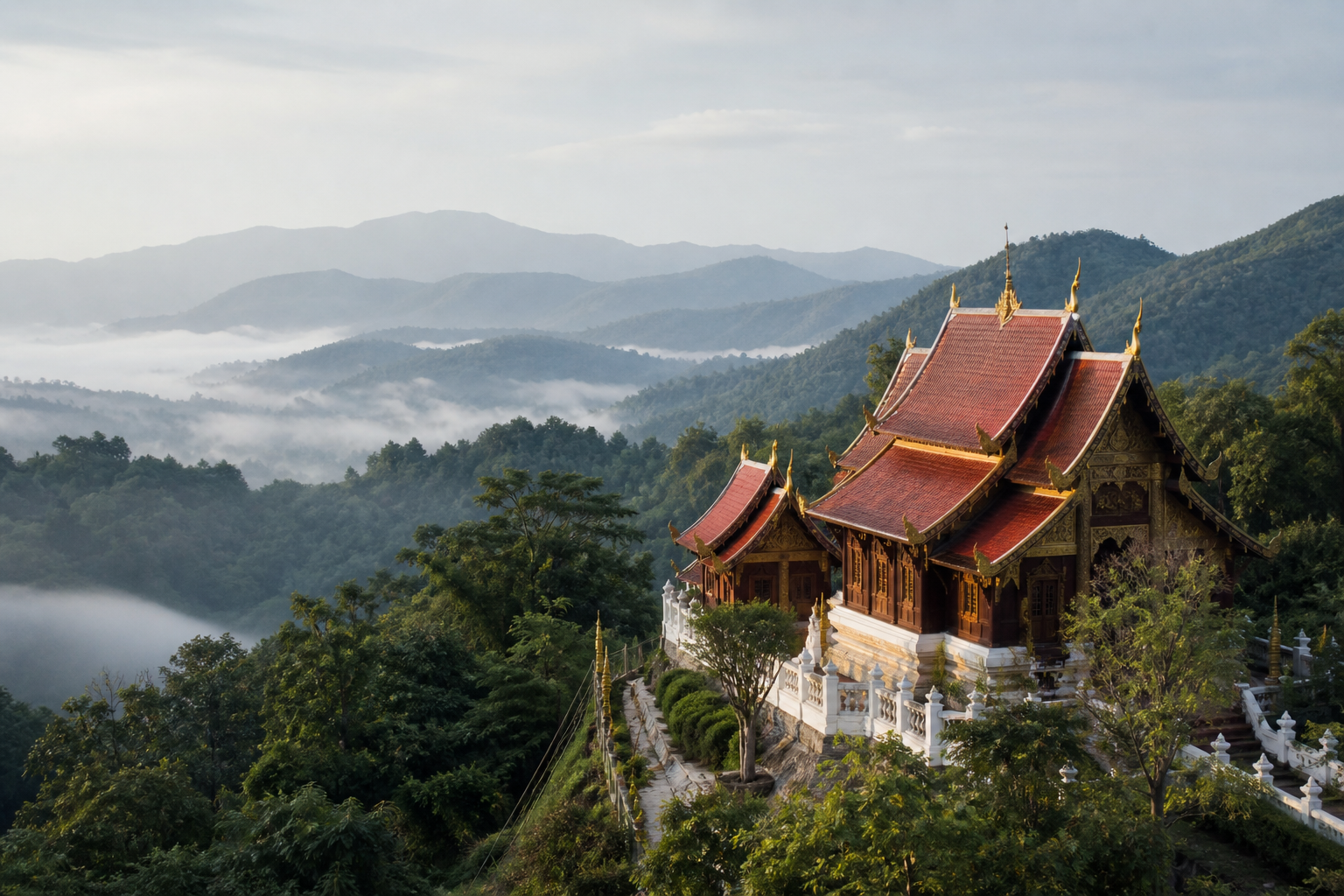
Chiang Mai and Northern Thailand
Chiang Mai · 3–5 days
Explore old-city temples, Wat Phra Singh, Wat Chedi Luang, markets and Doi Suthep. Nimman is modern and café-focused; the Old City and Wat Ket feel more traditional.
Responsible day trips
Consider Doi Inthanon, Mae Kampong or a walk with a local guide. Avoid elephant shows, riding and bathing. Look for small groups, independent welfare standards and observation-led visits.
Smoke and rain seasons
Northern air quality can fluctuate sharply, particularly around February to April. Check current readings before booking. The rainy season is lush, but mountain trails can be slippery.
Ayutthaya, Sukhothai and Khao Sok
Ayutthaya
Possible as a Bangkok day trip, but calmer overnight. Cycle only in manageable heat; otherwise agree a tuk-tuk price and duration before leaving.
Sukhothai
The historical park is spacious, green and quieter than Ayutthaya. It fits an overland Bangkok–Chiang Mai route if you have at least two nights.
Khao Sok
Rainforest, limestone and Cheow Lan Lake. Book accommodation and boat tours with a clear list of inclusions; consider weather, water levels, swimming confidence and insurance.
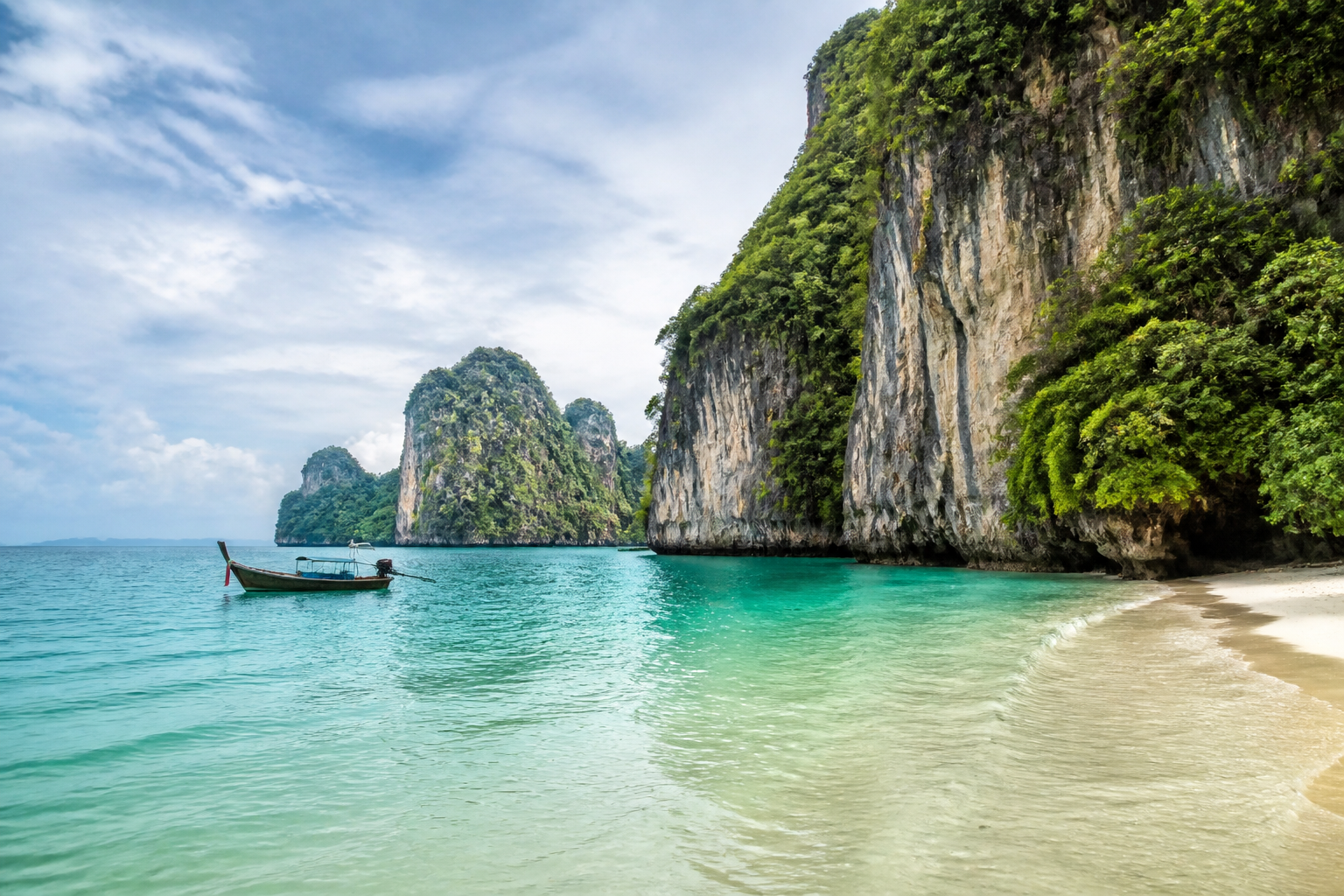
Which island and which coast?
| Region | Best for | Typical favourable months |
|---|---|---|
| Krabi, Railay, Koh Lanta | Limestone scenery, island trips, couples and families | usually November–April |
| Phuket | large hotel choice, direct flights, nightlife and excursions | usually November–April |
| Koh Samui | comfort, beaches and strong infrastructure | often February–September |
| Koh Phangan | quiet coves, yoga or parties, depending on the coast | often February–September |
| Koh Tao | diving and a compact island | often February–September; check sea conditions |
| Koh Chang/Koh Kood | green, quieter and closer to Bangkok than the south | usually November–April |
Monsoon timing is never a guarantee. Check local weather and sea conditions before every ferry; low-season services may be cancelled.
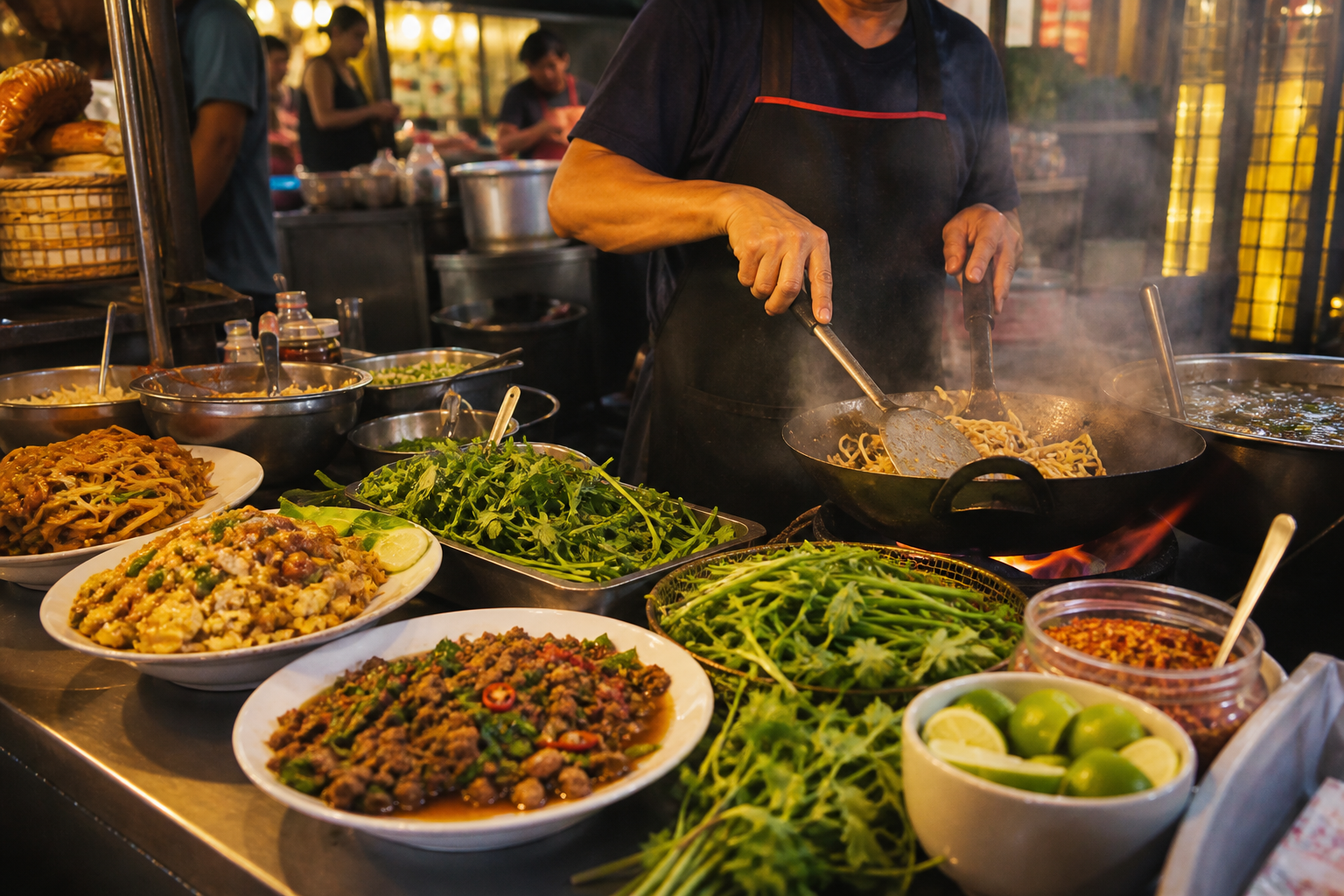
Food, restaurants and affordable groceries
What to try
Pad kra pao, khao man gai, som tam, tom yum, boat noodles and mango sticky rice. In the north, khao soi and sai ua; in the south, gaeng som, roti and assertive curries.
Choosing street food
Prefer busy stalls with freshly heated dishes, separated raw ingredients and clean worktops. Save allergy notes in Thai: fish sauce, shrimp paste and peanuts are common hidden ingredients.
Supermarkets
7‑Eleven is convenient but not always cheapest. Big C and Lotus’s suit larger shops, Tops is useful centrally, and Makro works for quantities. Fresh markets offer inexpensive fruit and cooked dishes.
Accommodation and sensible transport
In Bangkok, stay near BTS or MRT. In Chiang Mai, decide between old-city calm and Nimman nightlife. On islands, pier access, road quality and final transfers matter more than a short straight-line distance.
Domestic flights save time, sleeper trains replace hotel nights and buses reach almost every region. Use official operators or established booking platforms. Scooter crashes are a major risk: ride only with the correct licence, helmet, insurance and experience. Never leave a passport as collateral and photograph existing damage.
Safety, health and respect
Current travel advice
Special warnings apply to parts of Southern Thailand and some border areas. Check current official advice before every route and avoid political gatherings.
Health
Mosquito protection matters nationwide; dengue also occurs in cities. Malaria risk is regional. Discuss vaccines, personal risks and medication with a travel-health professional. Insurance including repatriation is strongly advisable.
Laws and behaviour
Do not import e-cigarettes or accessories. Drug penalties are severe. Cover shoulders and knees in temples, remove shoes and treat Buddha images respectfully. Thailand has strict laws protecting the monarchy.
Emergency numbers: Tourist Police 1155, general police 191, emergency medical service 1669. Store accommodation and insurance details offline.
Before departure
- Check passport, entry rules and current digital arrival formalities.
- Book the first and final nights and allow buffers for island transfers.
- Pack light temple clothing, rain protection, sunscreen and mosquito repellent.
- Download maps and save Thai addresses and allergy notes.
- Review weather, air quality and official travel advice before each leg.
Official planning resources
Use the Tourism Authority of Thailand for regional weather information, review current official travel and safety advice, and contact the official Tourist Police on 1155 when assistance is needed.
Thailand becomes better when the itinerary becomes calmer.
Choose one coast, give Bangkok and the north time, and treat transfers as a real part of the journey.
BangkokChiang MaiKhao SokIslands