
South Korea · Travel Guide
Seoul, Busan, Gyeongju & Jeju
Megacity energy, coastal life, ancient kingdoms and volcanic landscapes.
South Korea at a glance
South Korea combines fast-moving cities with historic palaces, accessible mountains and vibrant coastal towns. For a first visit, allow 10 to 14 days: four or five nights in Seoul, two in Gyeongju, three in Busan and — on a two-week trip — three on Jeju.
Best time
April to May and late September to October usually bring pleasant temperatures. Summers are hot, humid and rainy; winters are cold but often clear.
Route
Seoul → Gyeongju → Busan → Jeju. KTX trains link Seoul and Busan; use Singyeongju station for Gyeongju. Flying is the quickest way to Jeju.
Getting around
A T-money or EZL card simplifies buses and subways. Naver Map and KakaoMap are often more useful locally than western mapping services.
Seoul: palaces, neighbourhoods and night views
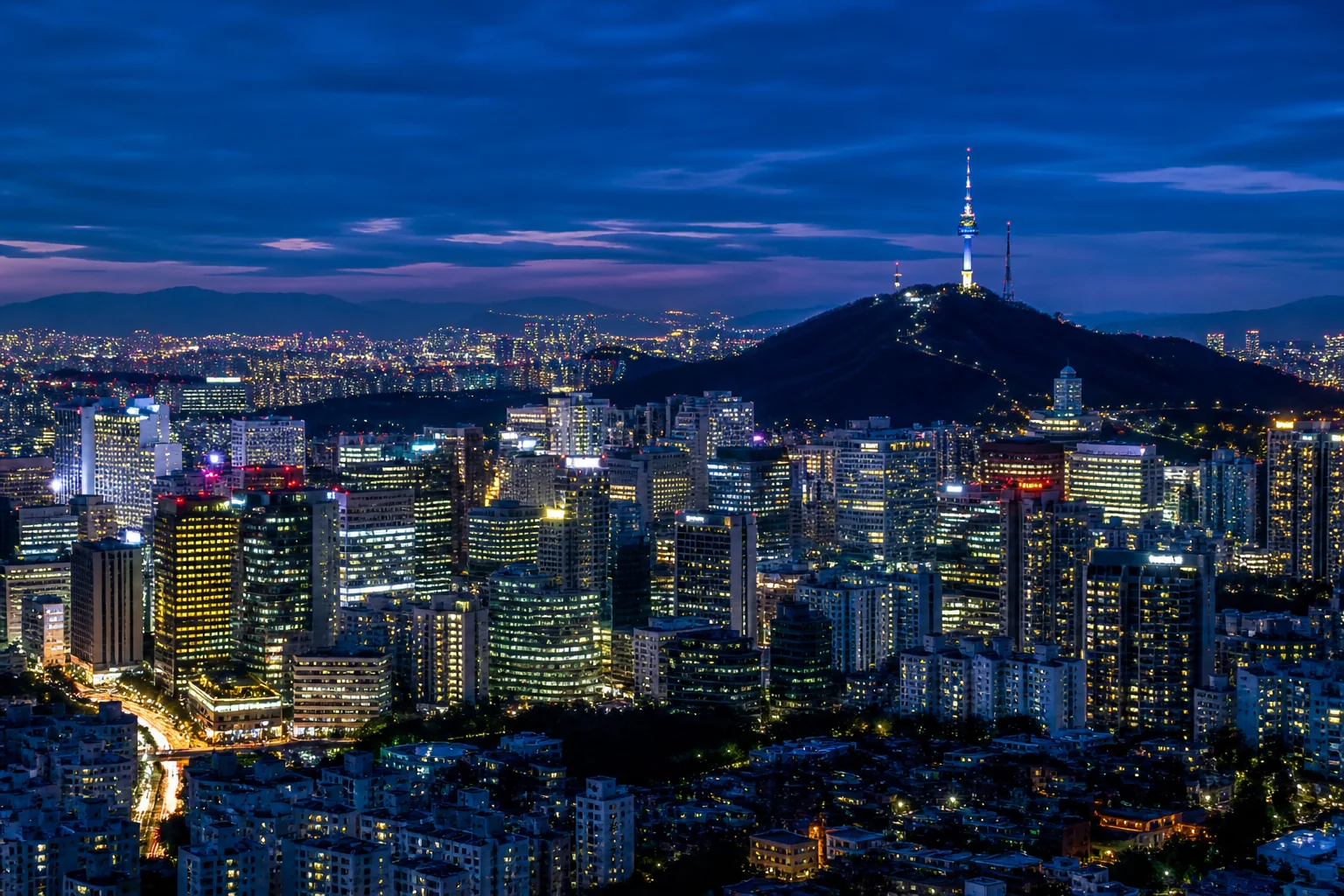
Start early at Gyeongbokgung Palace, walk through Bukchon and spend the afternoon in creative Ikseon-dong or Seongsu. For evening views, head to Namsan and N Seoul Tower, the Han River paths or the illuminated Dongdaemun district.
- Heritage: Gyeongbokgung, Changdeokgung and Jongmyo Shrine.
- Design and cafés: Seongsu, Hannam-dong and Ikseon-dong.
- Markets: Gwangjang for bindaetteok and gimbap; Mangwon for a more local atmosphere.
- Views: N Seoul Tower, Inwangsan or Lotte World Tower.
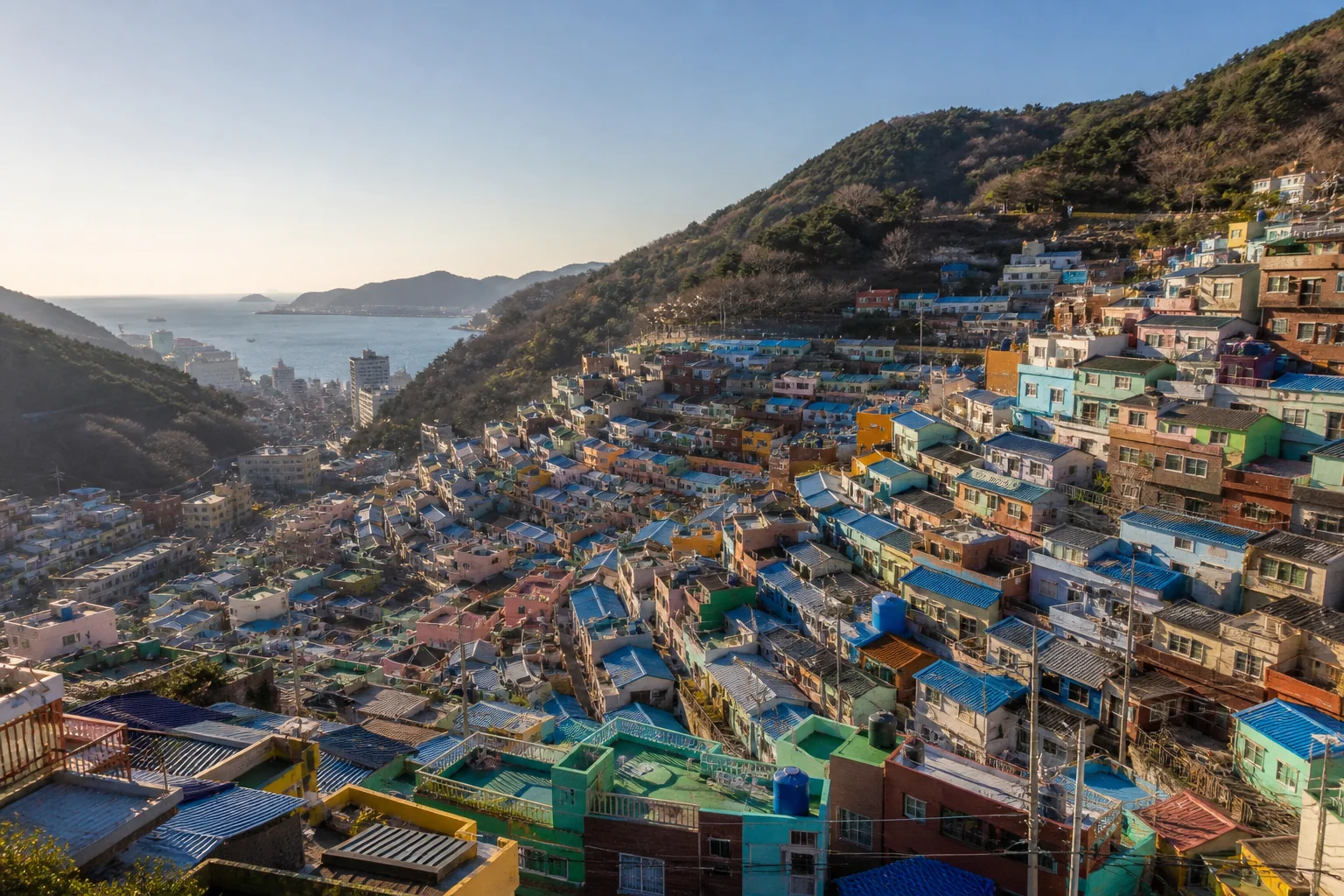
Busan: sea, markets and hillside streets
Busan feels more open and relaxed than Seoul. Visit Haedong Yonggungsa by the sea, follow the Haeundae waterfront and spend an afternoon in colourful Gamcheon Culture Village. Jagalchi Fish Market and Nampo-dong reveal the city’s food culture.
Beach choice: Haeundae is urban and lively; Gwangalli has the best evening view of the illuminated bridge; Songjeong is quieter and popular with surfers.
Gyeongju: the heritage of Silla
Gyeongju is the calm counterpoint to Seoul and Busan. Cycle between the royal tombs of Daereungwon, Cheomseongdae observatory and the illuminated Donggung palace grounds. Reserve half a day for Bulguksa Temple and Seokguram Grotto.
Where to stay: Around Hwangnidan-gil you will find hanok guesthouses, cafés and restaurants. Two nights cover the essentials; three allow a slower pace.
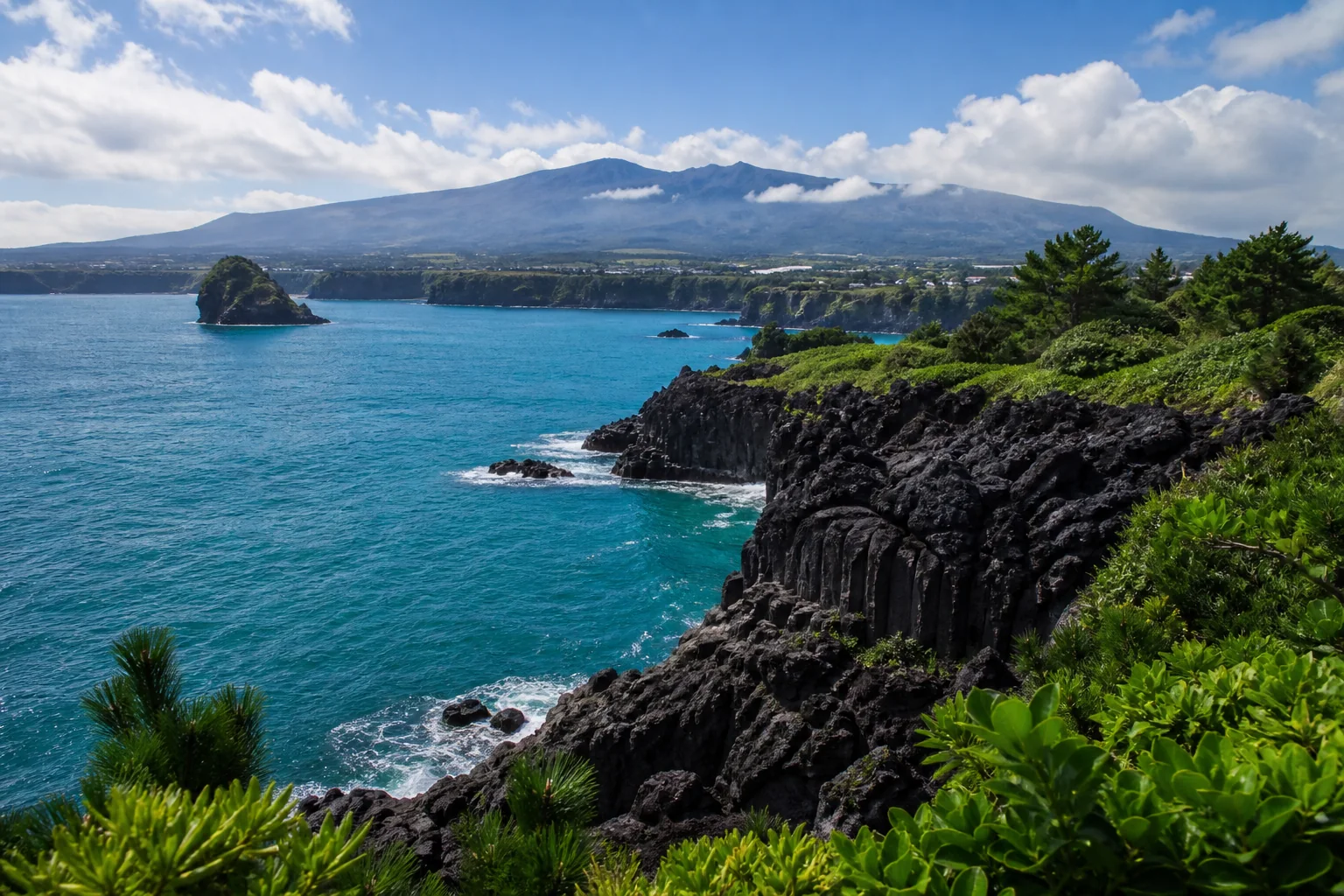
Jeju: volcanic coast and island trails
Allow three to five days for Jeju. Walk part of the Jeju Olle Trail, visit Seongsan Ilchulbong and explore lava and basalt coastlines. A Hallasan hike requires an early start and, depending on the route, advance reservation.
Mobility: Buses reach many places but take time. A rental car is useful for remote coastlines and flexible day trips; check licence and rental requirements before travel.
Food, restaurants and affordable choices
What to try
- Seoul: kalguksu, mandu, Korean barbecue and gimbap.
- Busan: dwaeji-gukbap, milmyeon and seafood.
- Gyeongju: ssambap and Hwangnam-ppang.
- Jeju: black pork, abalone and hallabong citrus.
Eat well for less
Gimbap shops, gukbap restaurants, market stalls and university districts offer filling meals at moderate prices. Local chains such as Hansot Dosirak and Bonjuk are straightforward, dependable options.
Supermarkets, convenience stores and budget
CU, GS25, 7-Eleven and Emart24 are convenient for breakfast, drinks and ready meals. For larger shops, Emart, Lotte Mart and Homeplus usually offer more choice. Traditional markets are excellent for fruit, snacks and regional specialities.
- Budget: roughly €55–85 per day with a guesthouse, public transport and simple restaurants.
- Comfort: roughly €110–180 with a good mid-range hotel, KTX and varied dining.
- Higher comfort: from about €220, especially in Seoul and on Jeju during peak periods.
Costs vary by season, city and exchange rate. Book early for cherry blossom season, autumn foliage and public holidays.
Safety and practical advice
South Korea has a low crime rate, but keep drinks in sight in nightlife areas, use legitimate taxis or public transport at night and watch valuables in crowds. Avoid demonstrations and large political gatherings.
- Tensions on the Korean Peninsula can change quickly; follow local news and official instructions.
- Consider the official Emergency Ready App and take emergency alerts seriously.
- Allow for summer downpours, typhoons and heat, as well as cold winter conditions.
- Carry suitable travel insurance and copies of prescriptions for essential medication.
Current advice: Always review the latest official South Korea travel advice from the UK FCDO before departure. Conditions and entry requirements can change at short notice.
Ideal 14-day itinerary
- Days 1–5: Seoul — palaces, markets, neighbourhoods and one day trip.
- Days 6–7: Gyeongju and the heritage of Silla.
- Days 8–10: Busan — coast, markets and temple.
- Days 11–14: Jeju — volcanic landscapes, an Olle trail and coast.
With ten days, skip Jeju or focus on Seoul and Busan. For a slower journey, add one night to each stop.