
NAMIBIA · DESERT · WILDLIFE
Namibia
Red dunes, a cool Atlantic coast, endless gravel roads and Etosha wildlife.
Plan your first journey
Namibia is made for spacious road trips. Allow at least 14 days for Windhoek, Sossusvlei, Swakopmund, Damaraland and Etosha. Drive in daylight: distances are long, gravel demands concentration and wildlife can enter the road without warning.
Best time
May–October is dry and comfortable, with cold nights. September and October are hotter but excellent for wildlife.
Vehicle
A robust car, two spare tyres, offline maps and plenty of water are sensible. A 4×4 is more comfortable for remote routes.
Trip length
14–18 days for the classic loop; three weeks for the south or Zambezi Region.
Windhoek, Sossusvlei & Deadvlei
Use Windhoek to settle in, shop and collect the car, then cross into the Namib. Start Sossusvlei and Deadvlei early for sculpted morning light and cooler temperatures. The final kilometres involve deep sand; use the shuttle if needed. Sesriem is the practical base, while stays inside the park gate allow earlier access.
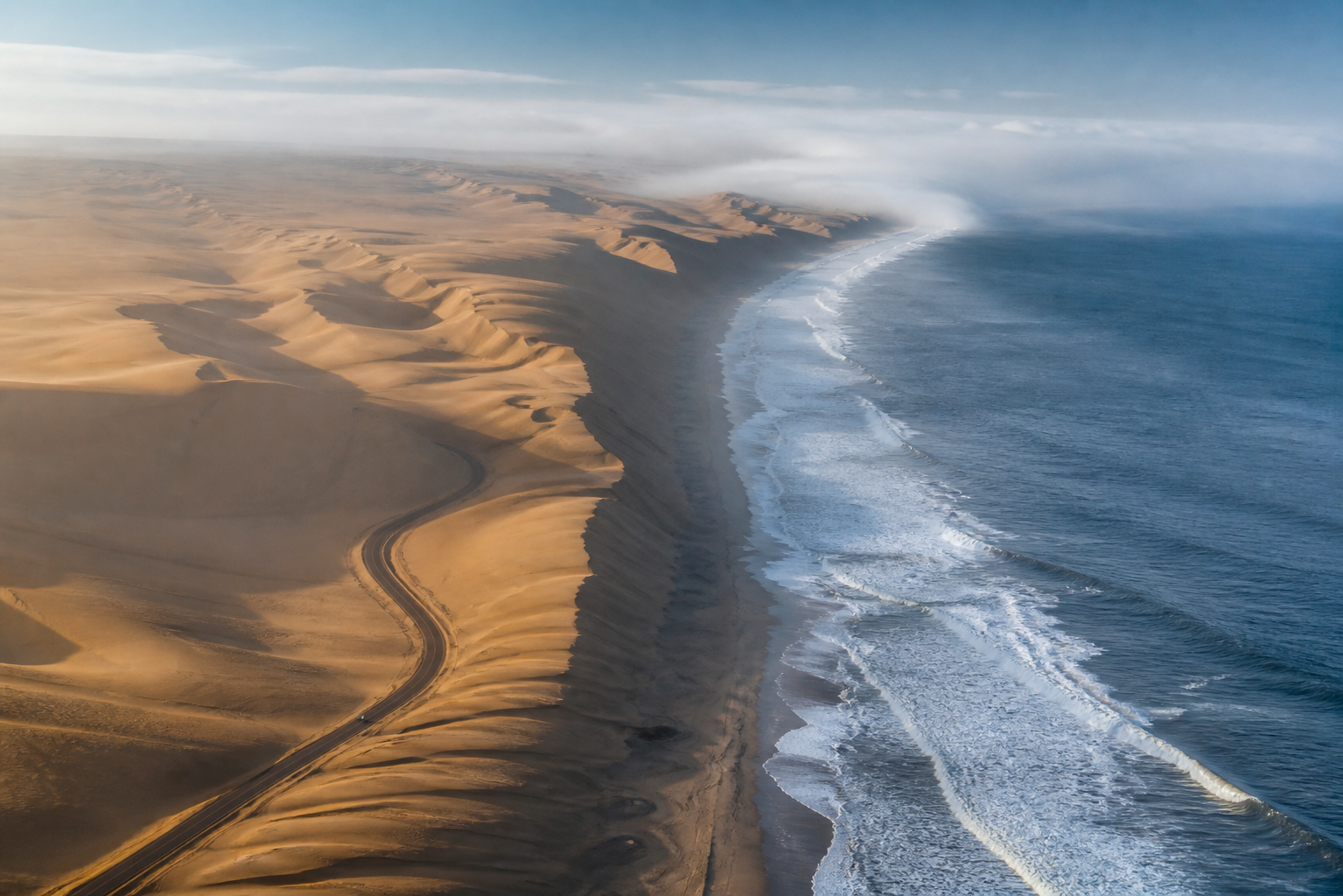
Swakopmund & Skeleton Coast
Swakopmund feels cool after the desert. Stay two nights for cafés, the ocean and dune activities. The Skeleton Coast combines fog, shipwrecks and vast empty shoreline. Check fuel, opening hours and permits before longer drives.
Walvis Bay offers lagoon trips; Cape Cross is known for its seal colony.
Damaraland & Etosha
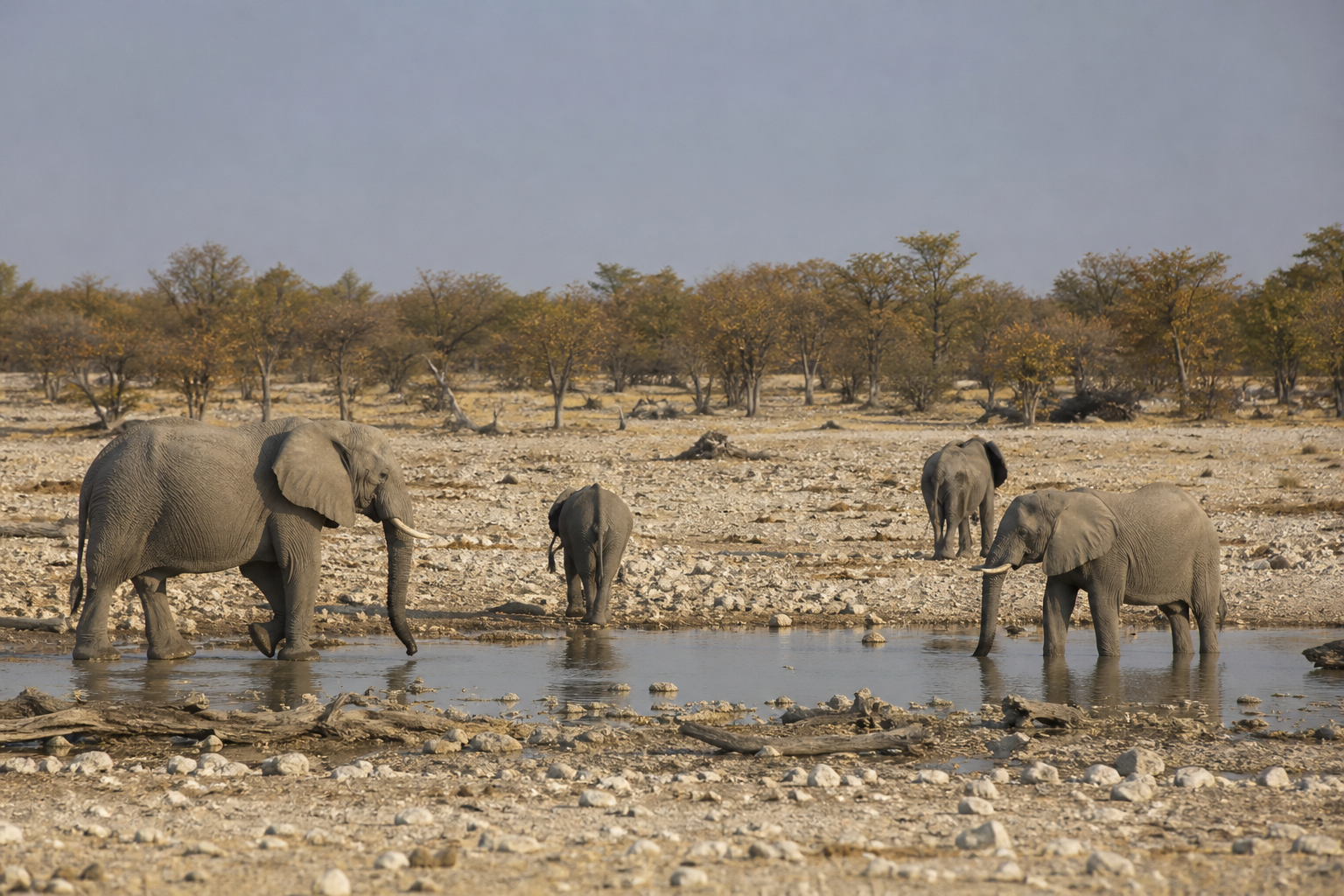
Damaraland brings rock scenery, Twyfelfontein and desert-adapted elephants; guided outings protect animals and travellers. Allow at least three nights in Etosha. Waterholes near Okaukuejo, Halali and Namutoni offer different wildlife rhythms.
Suggested 15-day route
- Windhoek – 1 night
- Sesriem/Sossusvlei – 2 nights
- Swakopmund – 2 to 3 nights
- Damaraland – 2 nights
- Etosha – 3 to 4 nights
- Waterberg area – 1 to 2 nights
- Windhoek – final night
Food, supermarkets & budget
Supermarkets in Windhoek, Swakopmund and larger towns are well stocked; buy water, snacks and fuel before remote stages. Try kapana, game dishes, potjiekos and local baked goods. Lodges often serve fixed menus, so request vegetarian food early.
Car hire, fuel, accommodation and activities dominate the budget. Camping reduces costs. Never begin a long stage with a nearly empty tank.
Safety & health
- Check current entry and safety advice. Keep valuables discreet in Windhoek and use organised transport after dark.
- Malaria risk varies by region and season, especially in the north and northeast. Seek travel-health advice and use strong mosquito protection.
- Heat, dehydration and slow access to help are major risks. Carry water, sun protection, emergency contacts and insurance covering evacuation.
- Adjust speed to gravel conditions, check tyres and avoid night driving.
Your journey. Your story. Your horizon.
Namibia is not a route to rush, but a landscape to read.