
MY HORIZON DIARY · ITALY
Art, food and landscapes at your own pace
The complete guide to Rome, Florence, Bologna, northern and southern Italy.
Italy at a glance
Italy is not a country for one checklist. Every region has its own cuisine, architecture and rhythm. The best first trip connects three or four bases by train and leaves room for markets, evening walks and spontaneous trattorias.
12–16 days
Ideal for Rome, Florence, Bologna and a slower finale.
April–June & September–October
More comfortable than midsummer; holidays and coasts remain busy.
Euro
Cards are common, though some cash remains useful for markets and small bars.
Rail first
Fast trains link major cities; cars are best kept for rural areas.
The ideal 14-day itinerary
Days 1–4 · Rome
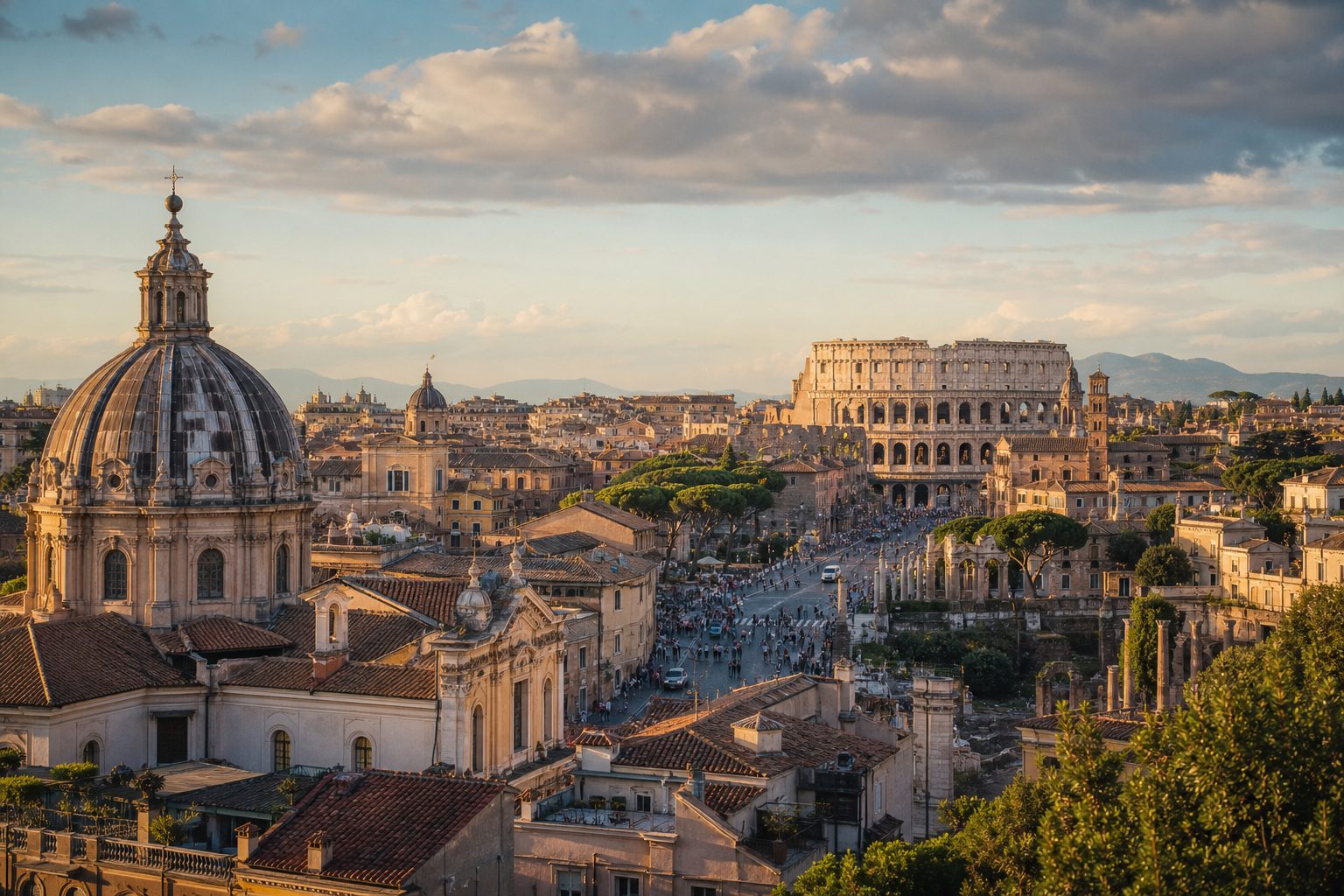
Ancient centre, Vatican City, Trastevere and a more local neighbourhood such as Testaccio. Book timed entry for the Colosseum and Vatican Museums.
Days 5–7 · Florence
Renaissance art, Oltrarno, markets and a day trip to Siena or Lucca.
Days 8–10 · Bologna
Porticoes, markets and day trips to Modena, Parma or Ravenna. Bologna is Italy’s most rewarding food hub.
Days 11–14 · Naples & the bay
Historic centre, Pompeii and Procida or Ischia. Add the Amalfi Coast only if you are comfortable with transfers and crowds.
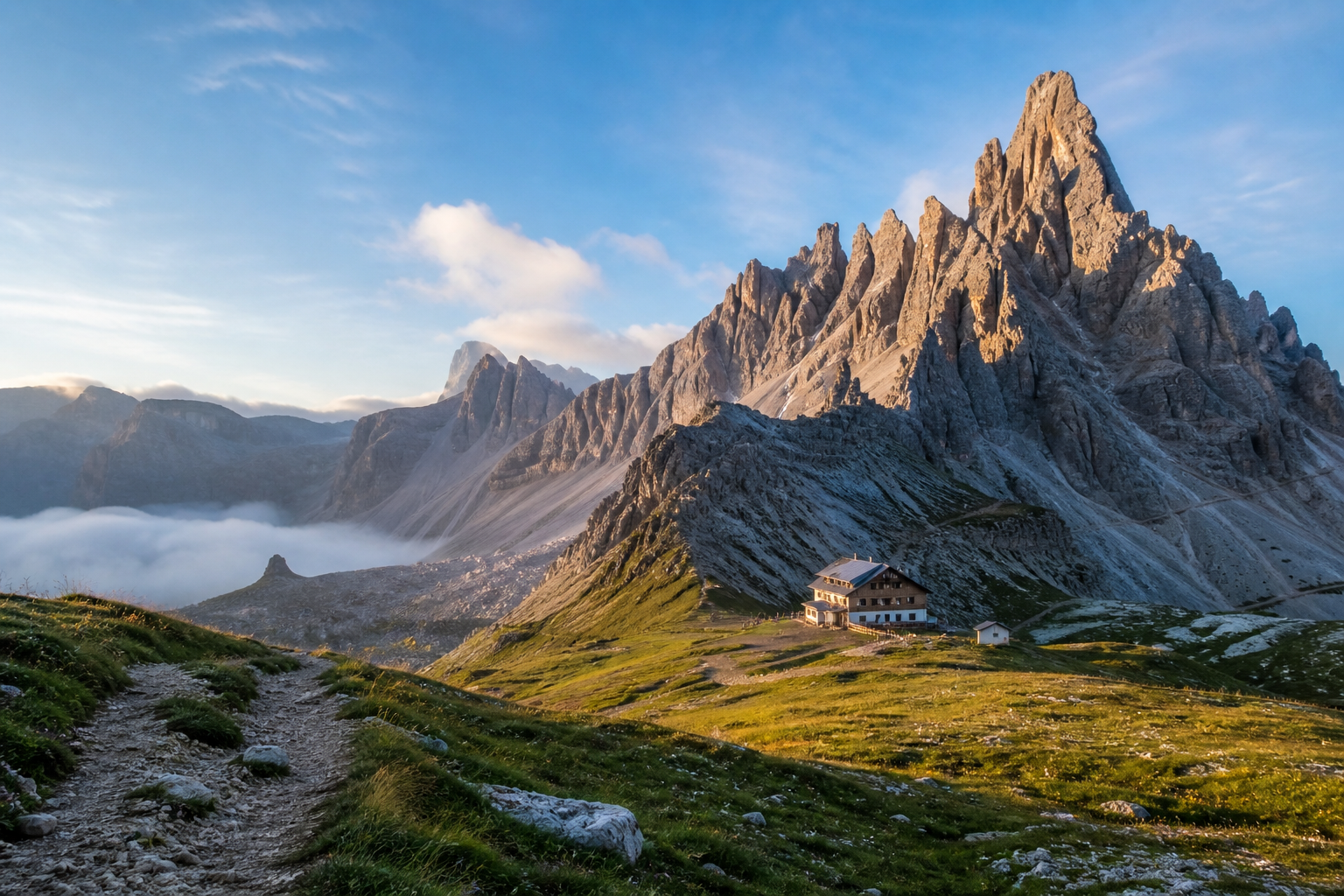
Nature alternative: replace Bologna and Naples with Lake Garda and the Dolomites. Sicily, Sardinia and Puglia deserve separate trips.
Regions with distinct character
Rome & Lazio
Antiquity, Baroque drama and living neighbourhoods. Ostia Antica and Tivoli make excellent day trips.
Tuscany
Florence for art, Siena and Lucca for atmosphere, Val d’Orcia and Chianti with a car.
Emilia-Romagna
Bologna, Modena, Parma and Ravenna combine food, design, mosaics and elegant old towns.
Northern Italy
Milan, Turin, Verona, lakes and Dolomites. Fast trains suit cities; mountains need more planning.
Naples & Campania
Intense, historic and deeply culinary. Pompeii, Vesuvius and the islands are easier than rushing several coast towns.
Puglia
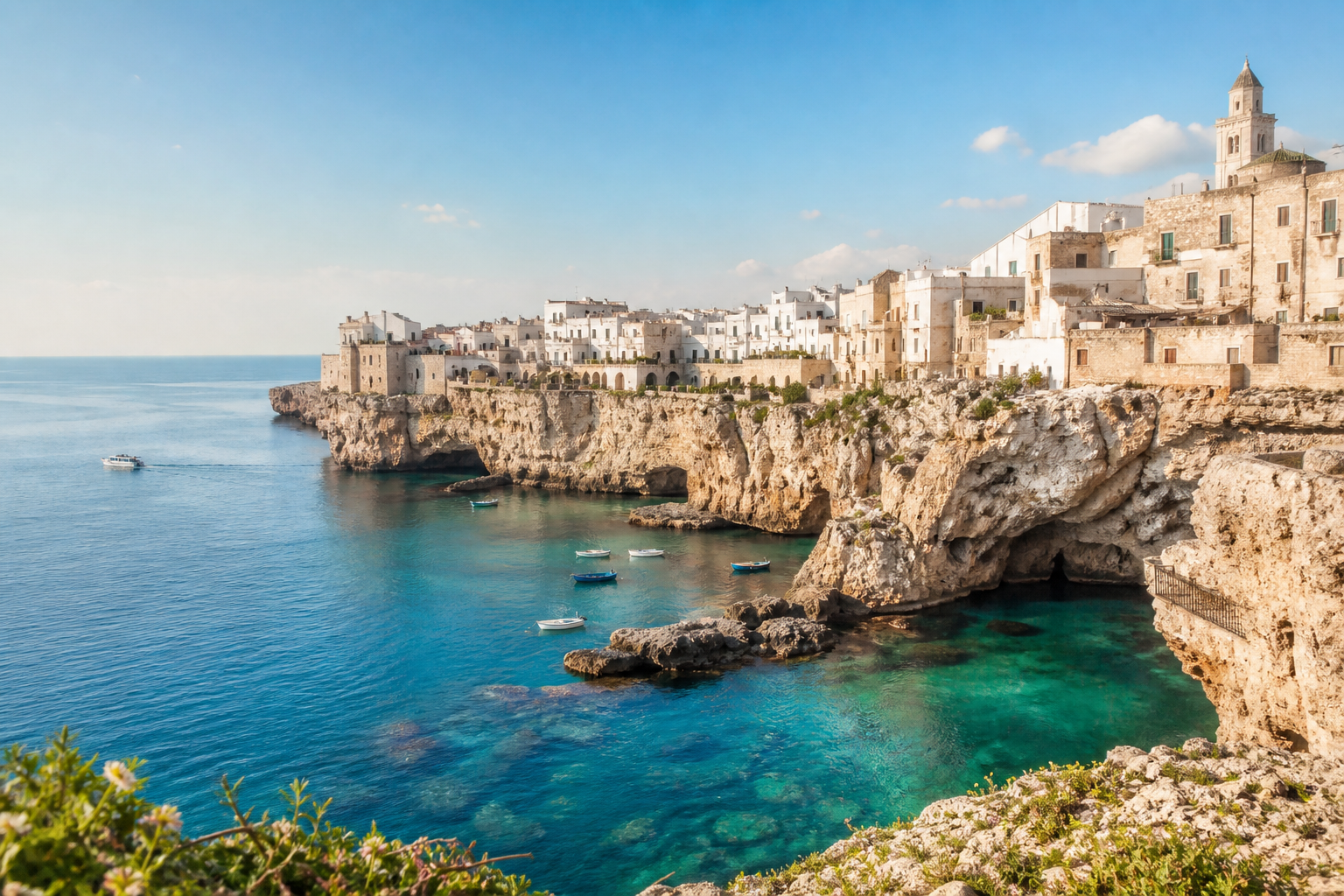
Bari, Lecce, the Itria Valley and rocky Adriatic coves. A car helps away from the main rail axis.
Sicily
Palermo, Baroque southeast, Etna and powerful regional cuisine. Never underestimate distances.
Sardinia
Beaches, mountain interiors and small towns; a car is nearly essential outside cities.
Getting around Italy
High-speed trains
Frecciarossa and Italo connect Milan, Bologna, Florence, Rome and Naples. Advance train-specific fares may be cheaper; flexible tickets usually cost more.
Regional trains
Excellent for day trips. Check whether paper or digital regional tickets require validation or check-in before departure.
Rental cars & ZTLs
Useful in rural Tuscany, Puglia, Sicily and Sardinia. Historic centres often have camera-controlled restricted traffic zones. Never enter without confirmed authorisation.
Urban transport
Rome and Milan can justify day passes; Florence, Bologna, Verona and Pisa are mostly walkable. Activate tickets before use.
Eating well: specific and regional
Reliable restaurant types
- Trattoria/Osteria: regional, often informal cooking.
- Tavola calda: prepared hot dishes for a quick lunch.
- Forno/Panificio: pizza al taglio, focaccia and baked goods.
- Enoteca: wine with smaller regional dishes.
How to recognise fair places
Short seasonal menu, local diners, clear prices and regional dishes. Huge illustrated menus beside major attractions rarely offer the best experience.
What to eat where
- Rome: carbonara, cacio e pepe, supplì
- Florence: ribollita, lampredotto, bistecca
- Bologna: tagliatelle al ragù, tortellini, mortadella
- Naples: pizza, pasta e patate, sfogliatella
- Puglia: orecchiette, focaccia barese, burrata
“Coperto” is a listed cover charge, not a tip. Tipping is optional.
Budget food and shopping
Supermarkets
Coop, Conad, Esselunga, Pam and Carrefour Market are widespread. Lidl, Eurospin, MD and Aldi are often cheaper. Small “Express” branches in historic centres usually cost more.
Markets
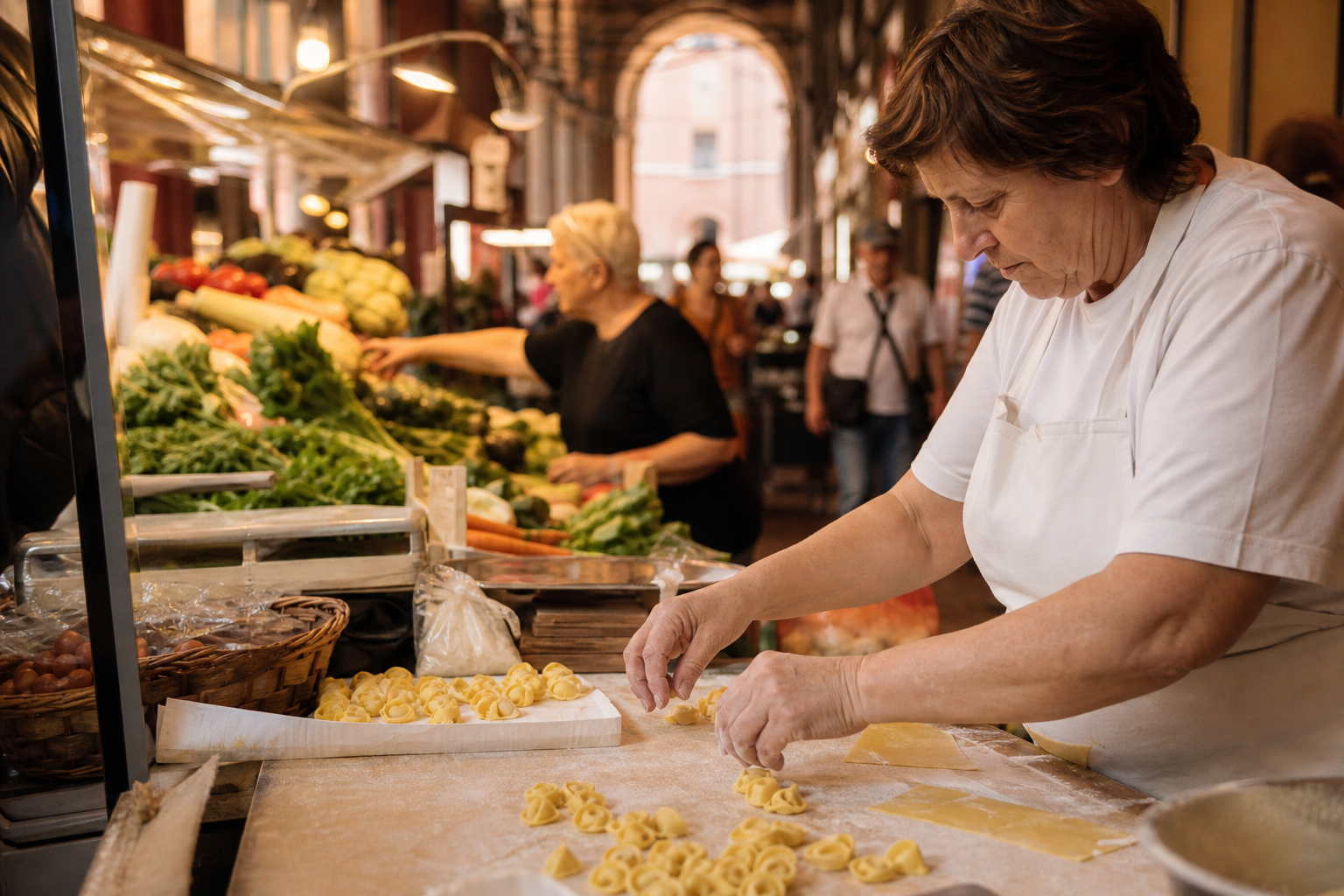
Fruit, bread, cheese and prepared dishes are ideal for picnics. Confirm prices before buying and only eat where permitted.
Budget strategy
Breakfast standing at the bar, lunch menus rather than dinner, pizza al taglio and clearly priced aperitivo offers. Kitchen-equipped accommodation helps on longer stays.
Reservations
Book popular small restaurants, museums and coastal accommodation ahead. Always verify current opening times directly.
Where to stay & safety
Practical neighbourhoods
- Rome: Monti, Prati, Testaccio or Bologna/Nomentana.
- Florence: Santa Croce, Santo Spirito or carefully chosen streets near Santa Maria Novella.
- Bologna: Centro Storico or Porta Saragozza.
- Naples: Chiaia, Vomero or a busy street in the historic centre.
Safety depends on the exact street and route home. Check recent accommodation reviews and maps.
Typical risks
Italy is generally straightforward to visit. Pay most attention to pickpocketing on crowded transport, at stations and around famous sights.
- Keep bags closed and close to your body.
- Do not leave phones loose on outdoor tables.
- Use official taxis and ticket channels.
- Leave nothing visible in a rental car.
- EU emergency number: 112.
Preparation & packing
Entry
EU and Schengen travellers generally need a valid national identity card or passport. Other nationalities may face different passport and visa rules; check official sources before departure.
Health
Consider an EHIC plus additional travel insurance. Take summer heat and sun seriously.
Pack
- Comfortable shoes for cobblestones
- Light shoulder covering for churches
- Refillable bottle and sun protection
- Small secure cross-body bag
- Driving licence and any required supporting documents
Frequently asked questions
Do I need a car in Italy?
Not for the classic city route. It helps in rural Tuscany, Puglia, Sardinia and parts of Sicily.
How many days work well?
Fourteen days cover three or four bases. Combining north and south in one week creates too much transfer time.
What should I reserve?
The Colosseum, Vatican Museums, Uffizi, high-speed trains and popular coastal stays early; regional day trips can remain flexible.
Is tap water drinkable?
Generally yes unless locally marked otherwise. Rome’s public nasoni fountains are especially useful.
Editorial note: Entry rules, timetables, prices, ZTL hours and safety conditions can change. Official information takes precedence. Last reviewed: August 2026.
Travel planning · Travel safety · Food & Restaurants · Hotels
Official planning sources
Check current entry rules and practical information with official sources before departure.