
MY HORIZON DIARY · GREECE
Ancient cities, lively tavernas and islands with their own rhythm
A complete guide to Athens, the Cyclades, Crete, Meteora and northern Greece.
Greece at a glance
Greece is far more than an island holiday. A rewarding first itinerary pairs Athens with one island group or a mainland route, leaving time for archaeology, mountains, beaches and unhurried dinners.
10–16 days
Athens plus two islands, or a focused mainland circuit.
May–June & September
Warm, with gentler heat and crowds than July and August.
Euro
Cards are common; cash remains useful on smaller islands.
Ferry + bus
Build routes within one island group and check seasonal timetables.
The ideal 14-day itinerary
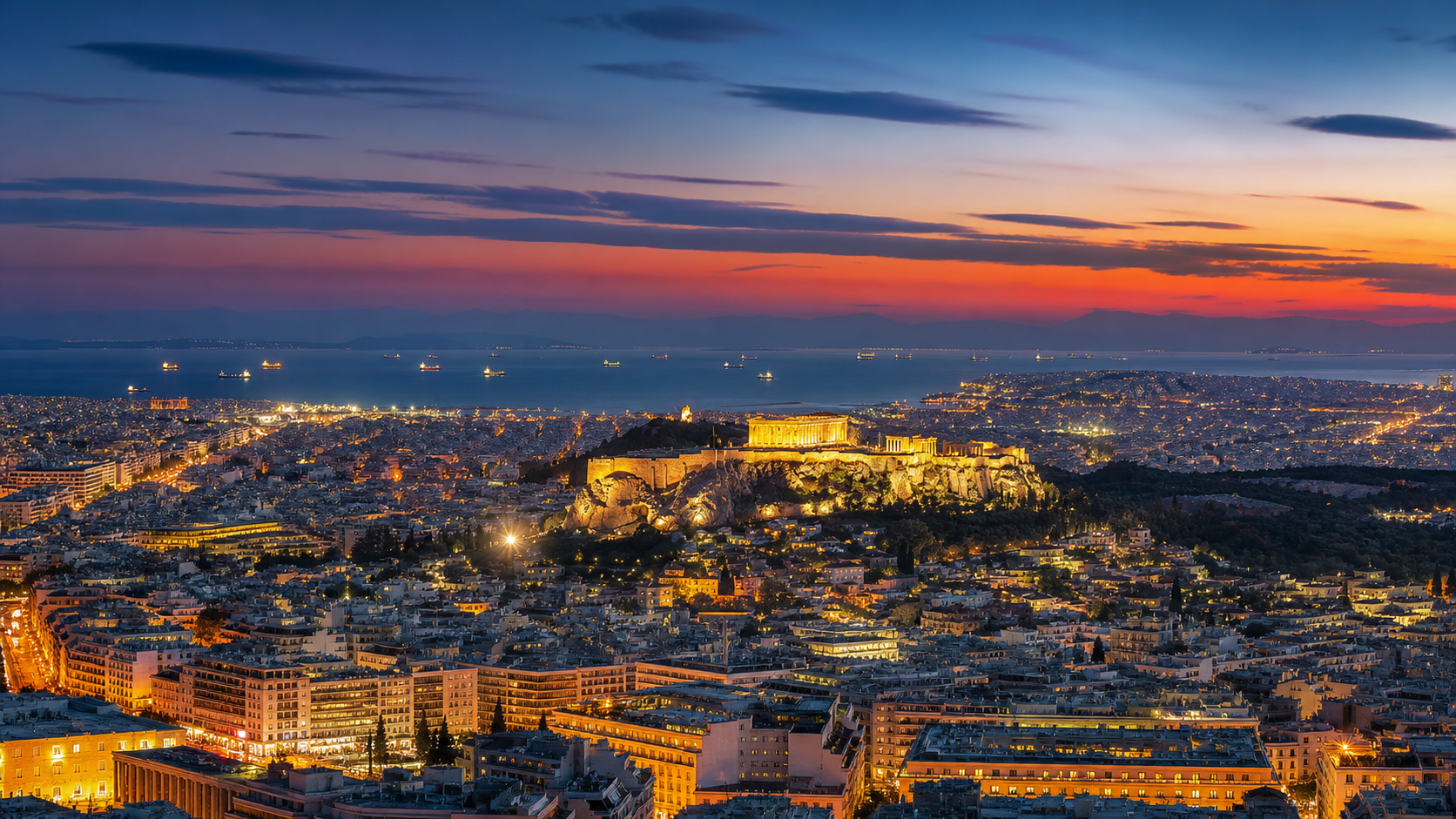
Days 1–4 · Athens
Visit the Acropolis early, then the Acropolis Museum, Plaka, Monastiraki, Exarchia and sunset from Philopappos Hill. Reserve an official Acropolis time slot.
Days 5–7 · Naxos
Explore Chora, mountain villages, long beaches and regional cooking. Naxos offers more space and everyday life than many postcard islands.
Days 8–10 · Santorini
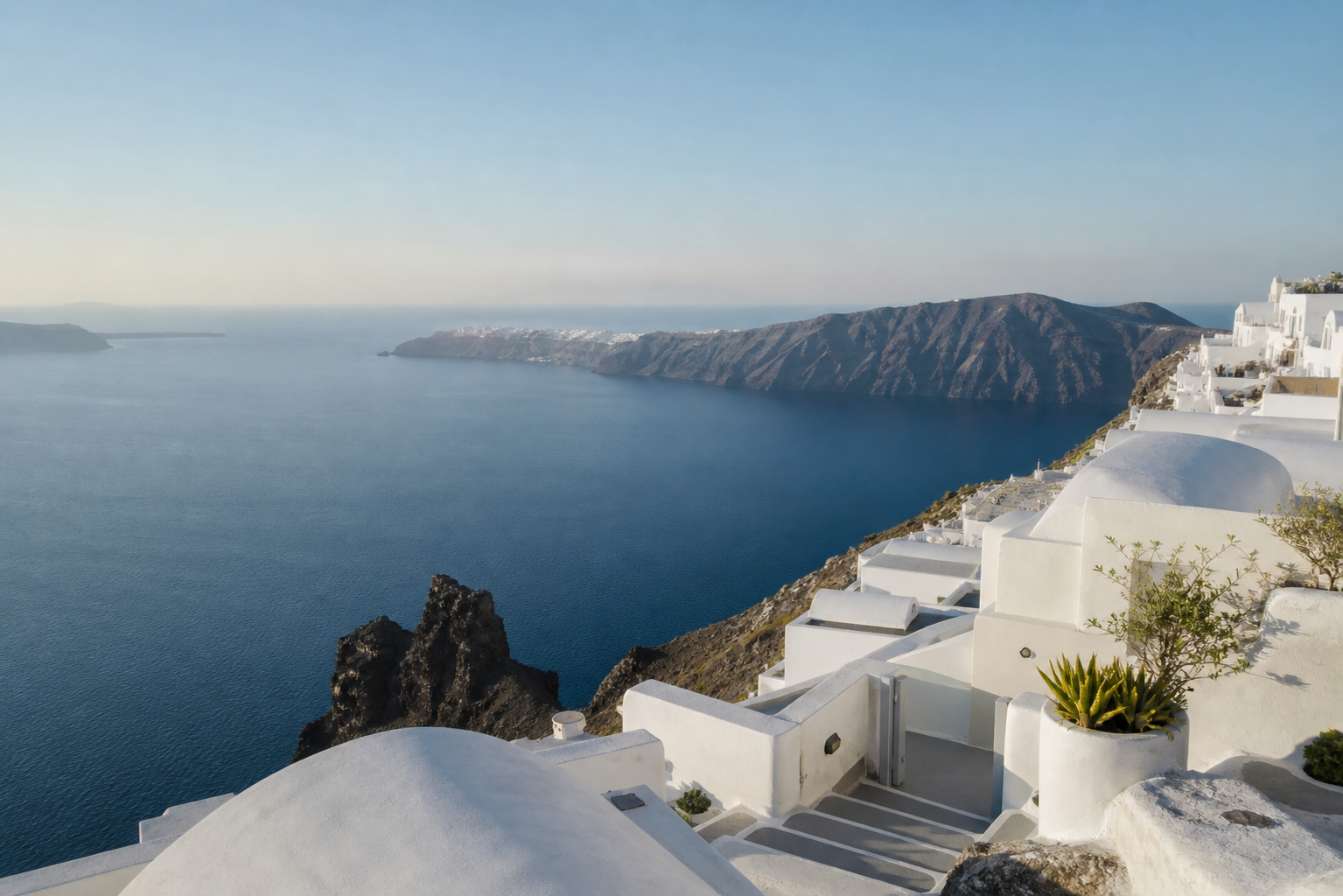
See the caldera, Akrotiri and villages beyond Oia. Start early, note cruise-ship days and seek quieter sunset viewpoints.
Days 11–14 · Crete
Use Heraklion or Chania as a base for Knossos, mountain villages and a gorge or coastal walk. Focus on one part of Crete rather than racing across the entire island.
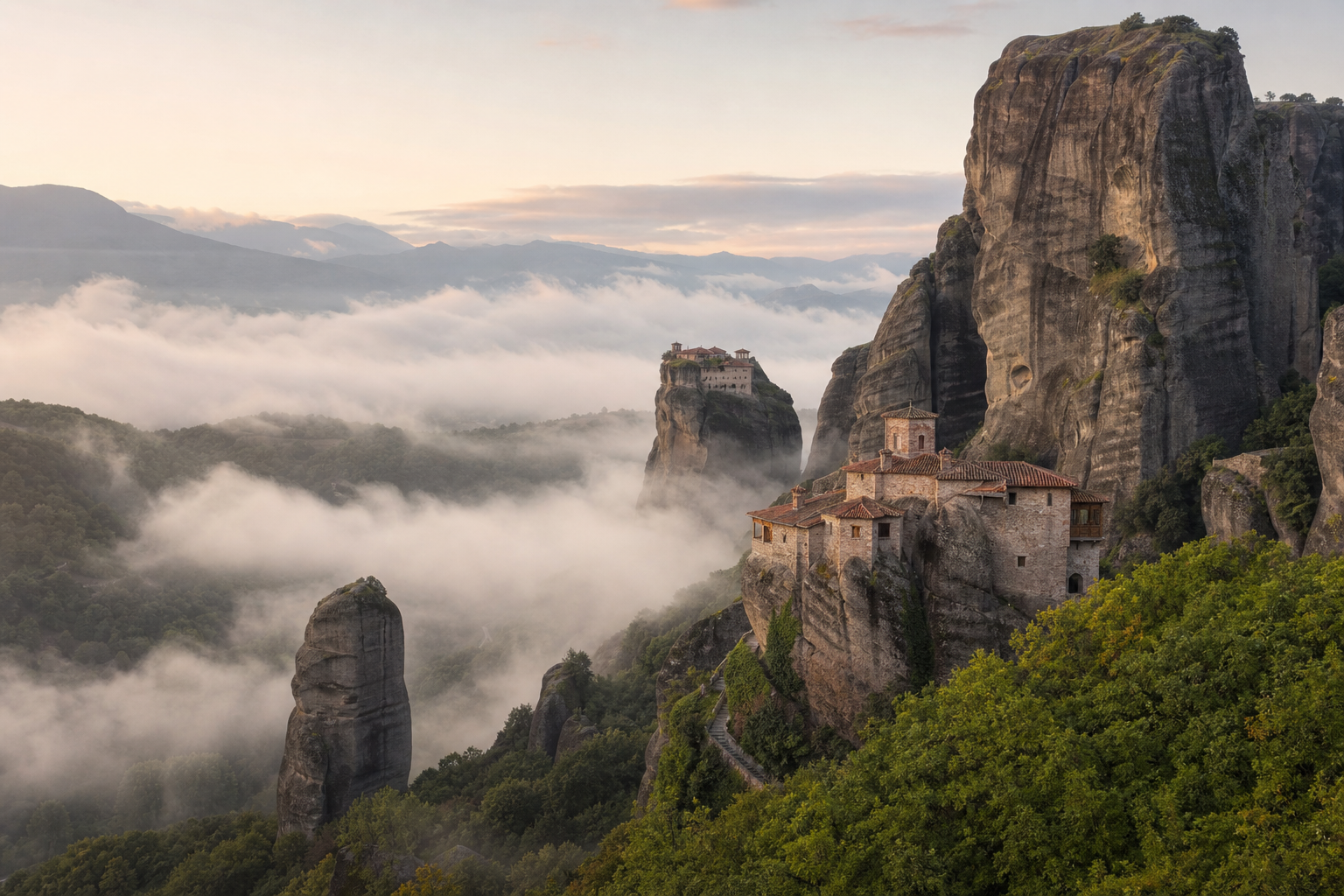
Mainland alternative: Athens, Delphi, Meteora and Thessaloniki combine history, mountains and outstanding food without island hopping.
Regions and islands with character
Athens & Attica
Ancient sites, contemporary neighbourhoods, markets and the Riviera. Cape Sounion is an easy half-day trip.
Cyclades
Santorini and Mykonos are famous, while Naxos, Paros, Syros, Tinos and Milos offer distinct landscapes and budgets.
Crete
Large enough for several journeys: Minoan culture, high mountains, gorges, beaches and a strongly independent cuisine.
Ionian Islands
Corfu, Kefalonia and Zakynthos are greener than the Cyclades and suit longer stays.
Peloponnese
Nafplio, Mycenae, Epidaurus, Mani and Olympia form a varied road trip.
Meteora & Central Greece
Monasteries on rock pillars, hiking trails and Delphi. Respect monastery dress codes.
Thessaloniki & Macedonia
A youthful port city with Byzantine heritage, markets and excellent food; Halkidiki is within reach.
Dodecanese
Rhodes, Kos, Symi and Karpathos combine medieval towns with dry island landscapes.
Getting around Greece
Ferries
High-speed ferries save time but react more strongly to wind. Larger conventional ships are often steadier and cheaper. Book ahead in peak season.
Buses
Regional KTEL networks connect many places reliably, but use separate regional websites and seasonal schedules.
Rental cars
Useful in Crete and on the mainland. Allow for narrow island roads, heat, limited parking and varying insurance terms.
Athens
Metro and tram cover major districts and the airport. Guard valuables in crowds and use licensed taxis.
Food, restaurants and budget shopping
Recognising a good taverna
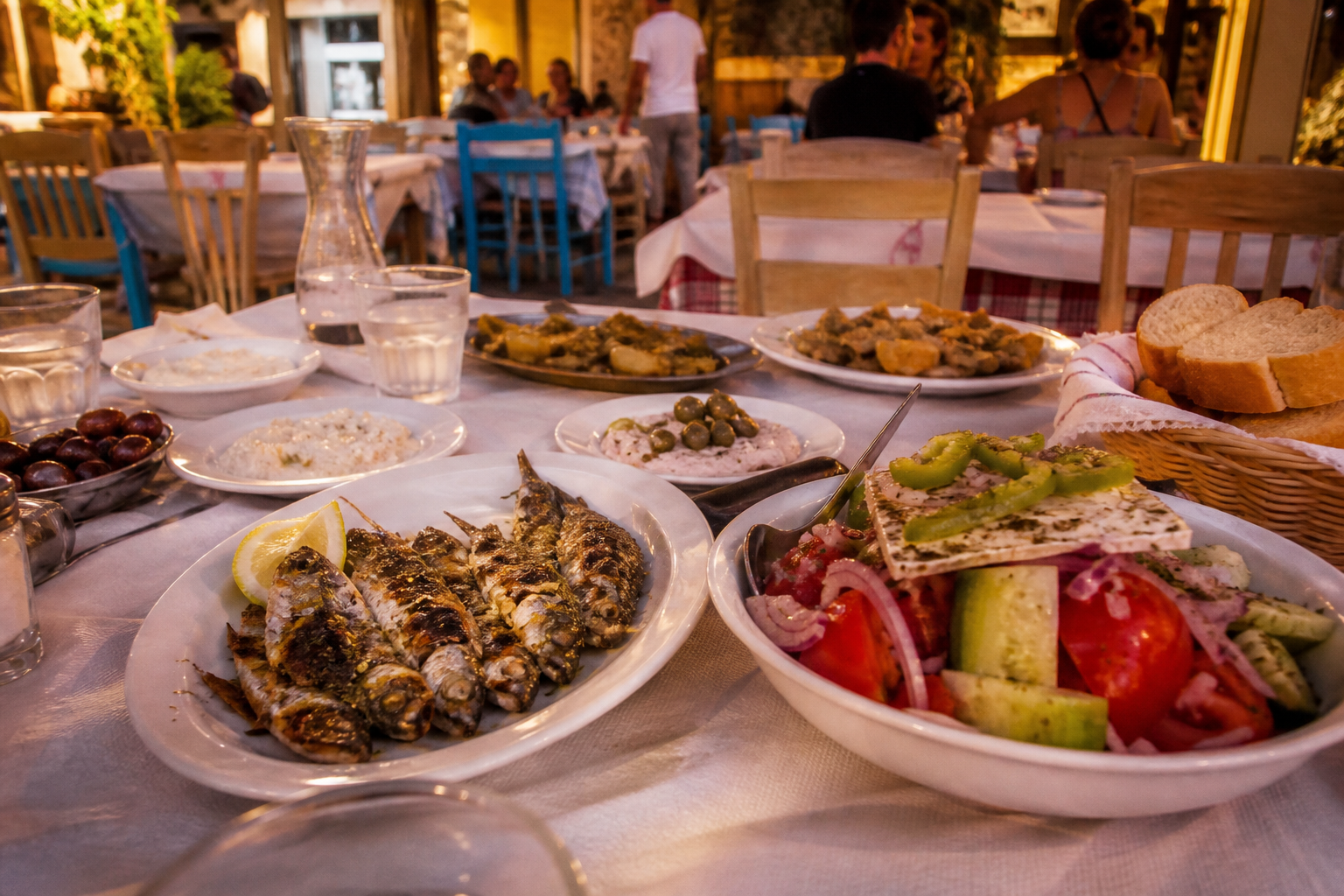
A short menu, seasonal dishes, visible daily specials and local customers are positive signs. Ask for the per-kilo price before ordering fish. In Athens try Koukaki, Pangrati and Petralona; in Thessaloniki explore Ladadika, Ano Poli and the streets around Kapani Market.
What to eat
Try horiatiki, grilled octopus or sardines, gemista, fava, souvlaki, Cretan dakos and Thessaloniki bougatsa. Individual islands have their own cheeses, capers and pasta dishes.
Supermarkets
Lidl is generally economical. Sklavenitis, AB Vassilopoulos, My market and Masoutis offer broad selections; tiny island minimarkets cost more. Weekly laiki markets are excellent for fruit, olives and cheese.
Budget strategy
Combine a bakery breakfast, gyros or souvlaki at lunch and shared meze at dinner. Water, beach facilities and transfers can be notably expensive on heavily visited islands.
Accommodation and safety
In Athens, Koukaki and Pangrati are practical, while the exact street and late-night route matter more than broad district labels. Common risks include pickpocketing, extreme heat, strong wind, slippery paths and hazardous driving. Follow wildfire and heat alerts in summer, leave flexibility around ferries and never keep luggage visible in a car. The European emergency number is 112.
Frequently asked questions
How many islands in two weeks?
Two islands plus Athens is comfortable. Three only works with short, reliable connections.
Do I need a car?
Not in Athens; often useful in Crete, the Peloponnese and less connected islands.
Can I drink tap water?
Usually in Athens and many mainland places. Bottled water is recommended on numerous islands; follow local accommodation advice.
What should I reserve?
Book ferries, popular island hotels, Acropolis time slots and summer rental cars early.