
Between medinas, the Atlas and the Sahara
A complete guide to Marrakech, Fès, Chefchaouen, the Atlantic coast and a responsibly planned desert journey.
Morocco at a glance
Best time
March to May and September to November. Midsummer is extremely hot in Marrakech, Fès and near the desert, while the mountains and Atlantic coast are milder.
Ideal length
Allow 10 to 14 days for two cities, the Atlas or desert and the coast. Fewer bases create more time for medinas and regional food.
Money & language
Moroccan dirham. Arabic and Amazigh are official; French is widely used. Cash remains important in souks and small restaurants.
Three practical itineraries
| Route | Stops | Length |
|---|---|---|
| Classic South | Marrakech 4 · Aït Ben Haddou 1 · Dadès 1 · Merzouga 2 · return 2 | 10 days |
| Imperial cities & North | Casablanca/Rabat 2 · Fès 3 · Chefchaouen 2 · Tangier 2 | 9–10 days |
| City & Atlantic | Marrakech 4 · Atlas 2 · Essaouira 3 · Agadir/Taghazout 3 | 12 days |
Planning tip: Marrakech to Merzouga is a long journey. Include at least two intermediate stops rather than booking a rushed two-day return tour.
Regions and highlights
Marrakech
Explore the medina early, visit Jardin Majorelle or El Badi Palace later and eat around Djemaa el-Fna in the evening. A riad in a side lane is often calmer than accommodation directly on the square.
Fès & Meknès
Fès has an intricate historic medina. A licensed guide adds context in craft districts and tanneries. Meknès and Volubilis work well as a day trip.
Atlas & Sahara
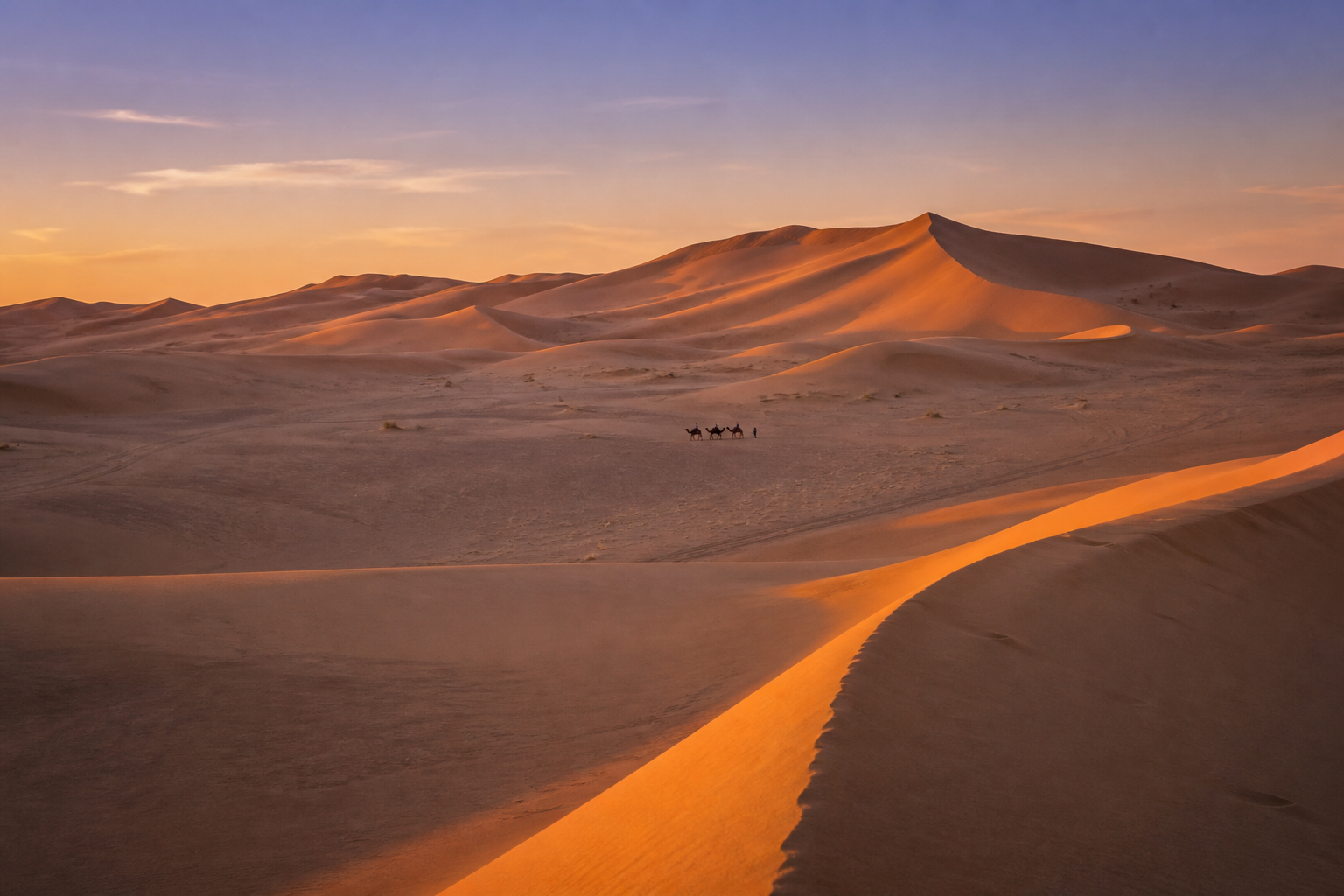
Imlil is a trekking base; respect altitude and weather. For desert camps, look for small groups, fair working practices, responsible waste management and honest transfer times.
Chefchaouen
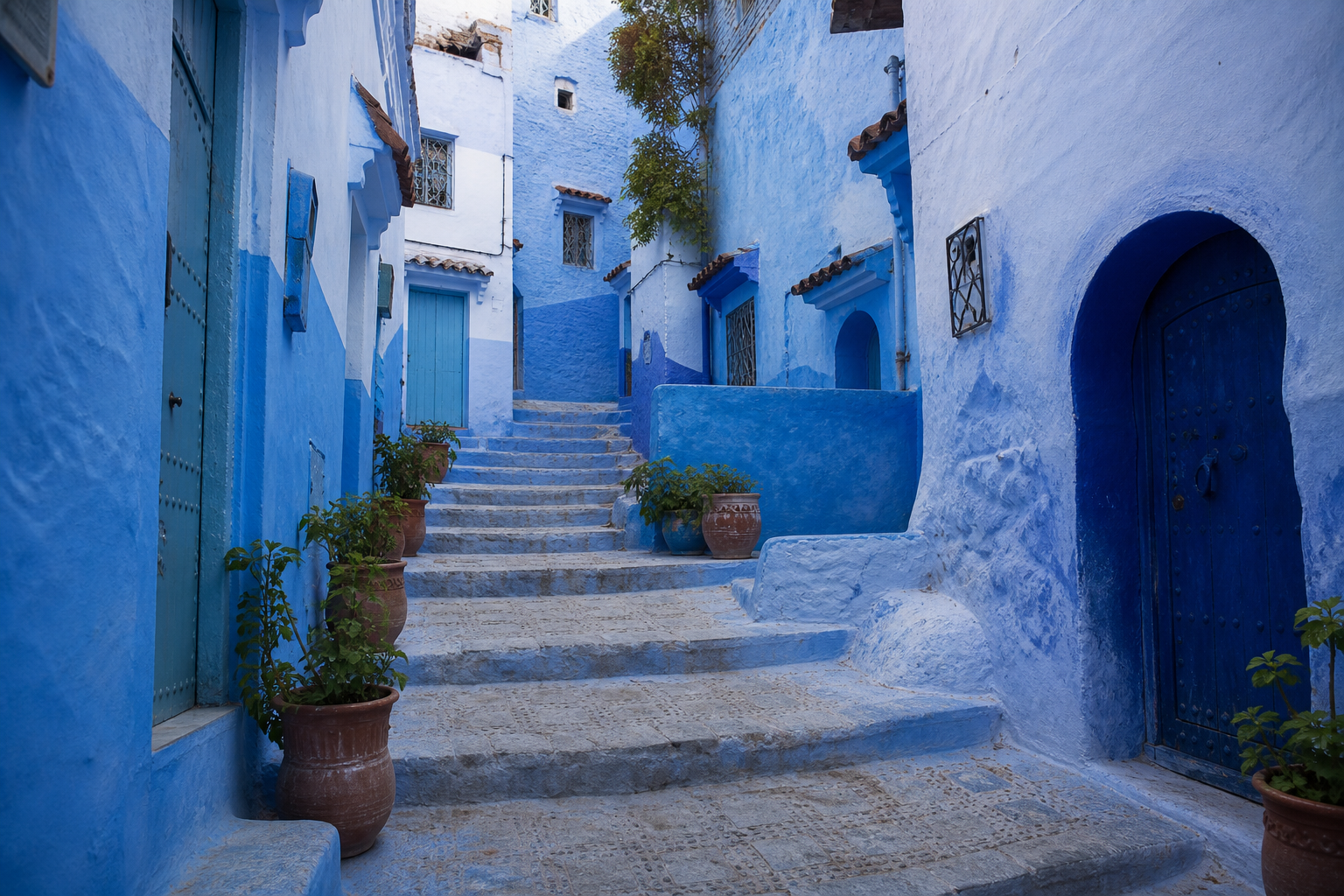
Beyond its blue lanes, visit the kasbah, try local food and walk toward the Rif Mountains. Staying overnight avoids the busiest day-trip hours.
Essaouira
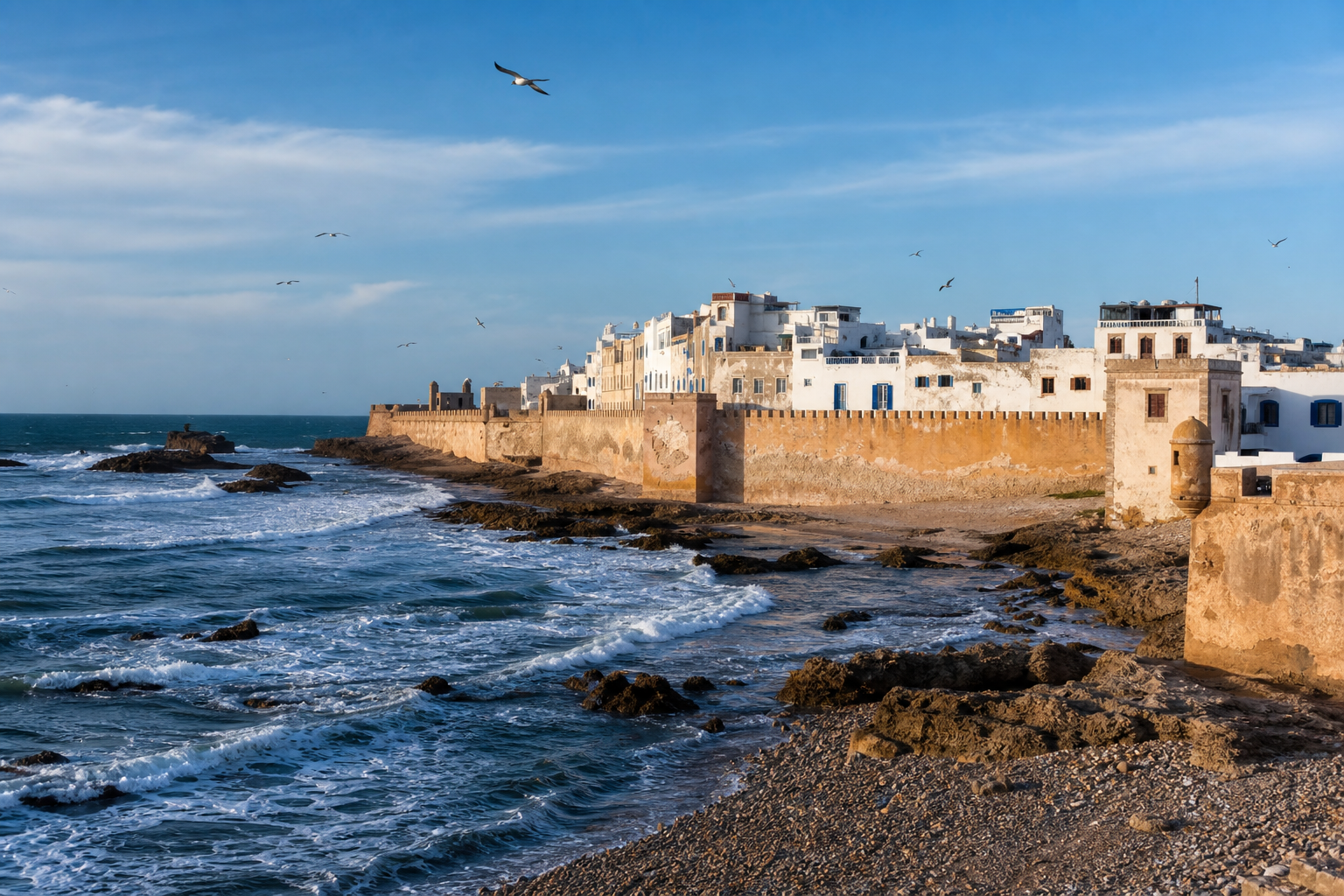
A breezy Atlantic town with a compact medina, fishing harbour, galleries and a long beach. It is an excellent pause after Marrakech and cool after sunset.
Rabat & Casablanca
Rabat is relaxed and rewarding for the kasbah and Hassan Tower. Casablanca is best for the Hassan II Mosque and twentieth-century architecture.
CITIES IN DETAIL
Tangier, Meknès, Fès and Rabat
These four cities reveal a different Morocco from Marrakech: Mediterranean and international in Tangier, calm and monumental in Meknès, deeply artisanal in Fès, and green and relaxed in Rabat.
Tangier · 2–3 days
See: the kasbah and its museum, medina, Grand Socco, American Legation, Café Hafa and the corniche. Allow half a day for Cap Spartel and the Caves of Hercules.
Stay: kasbah or medina for atmosphere; Iberia and Marshan are quieter. Tanger Ville station is convenient for Al Boraq but less historic.
Eat: grilled fish, calamari, bissara and northern-style tagines. Near the harbour, confirm prices before ordering.
Onward travel: Al Boraq runs to Rabat and Casablanca. Reach Chefchaouen by CTM bus or shared grand taxi.
Meknès · 1–2 days
See: Place el-Hedim, Bab Mansour, Moulay Ismail Mausoleum, the Heri es-Souani granaries and the comparatively peaceful medina.
Stay: near Place el-Hedim for short walks; Hamria for modern hotels, restaurants and easier taxi access.
Eat: small medina restaurants serve tagines, brochettes and soups, often at lower prices than Fès or Marrakech.
Day trip: combine Volubilis with Moulay Idriss Zerhoun. Choose an official guide at the entrance and arrange the return trip in advance.
Fès · 3–4 days
See: Bou Inania, Nejjarine Museum, the Qarawiyyin quarter, craft districts, tanneries and the view from the Borj Nord hills. Keep one full day free for Fès el-Bali.
Stay: Batha and Bab Bou Jeloud are accessible; deep-medina riads are atmospheric but need luggage assistance. Ville Nouvelle is quieter and transport-friendly.
Eat: Fassi cooking includes pastilla, rfissa, lamb with prunes and elaborate salads. Market-based cooking classes work best with small groups and transparent ingredients.
Tip: Use licensed guides for workshops and tanneries. A viewpoint should never oblige you to buy leather.
Rabat · 2–3 days
See: Kasbah of the Udayas, Andalusian Garden, Hassan Tower, Mohammed V Mausoleum, Chellah and the Mohammed VI Museum.
Stay: Hassan and Quartier des Orangers are central and calm; Agdal has cafés, restaurants and tram connections. The medina is easier to navigate than Fès.
Eat: modern Moroccan cooking in Agdal, traditional dishes in the medina and seafood toward Salé and the coast.
Day trip: Salé lies across the river and is connected by tram. Rabat is also an easy first or final stop near Casablanca.
Recommended northern route: Tangier 2 nights → Chefchaouen 2 → Fès 3 → Meknès 1 → Rabat 2. The travel legs stay short and every city receives enough time.
Food, restaurants and affordable groceries
What to eat
Tagine, Friday couscous, pastilla, harira, Marrakech tanjia, grilled fish in Essaouira and msemen or baghrir for breakfast. At stalls, choose busy places with visibly fresh food.
Choosing restaurants
Family-run places one or two streets from major squares are often better value. Compare recent reviews, current menus and prices; verify commission-based recommendations.
Supermarkets
Marjane and Carrefour have broad selections; Carrefour Market is practical in cities. Bim is inexpensive for basics. Local markets are ideal for fruit, bread, olives and spices.
Travellers tolerate tap water differently. Use sealed water if sensitive; a reliable filter bottle can reduce plastic.
Where to stay
| Place | Practical areas | Character |
|---|---|---|
| Marrakech | Medina, Hivernage, Guéliz | Riad atmosphere / quieter-modern / dining & transport |
| Fès | Edge of Fès el-Bali, Batha, Ville Nouvelle | Historic / accessible / modern |
| Essaouira | Medina or seafront | Compact / airy and taxi-friendly |
| Chefchaouen | Edge of the medina | Atmospheric with fewer steep steps |
Before booking a riad, ask about luggage transfer, stairs, winter heating and distance from the nearest vehicle access.
Transport and budget
ONCF trains are comfortable between major cities; Al Boraq links Tangier, Rabat and Casablanca. CTM and Supratours operate many long-distance buses. For the Atlas, kasbah route and desert, use a reputable driver or rental car and avoid rural night driving.
Local cafés, buses and simple riads keep costs moderate. Cards are common in upscale hotels, while small businesses prefer cash. Use ATMs attached to banks and carry small notes.
Safety, respect and health
Inside medinas
Use an offline map, politely decline unofficial guides, agree prices before services and keep valuables discreet. Choose official taxis or traceable pre-booked transfers.
Dress & photography
Cover shoulders and knees in rural and religious settings. Always ask before photographing people and artisans. Most mosques are closed to non-Muslim visitors.
Health
Pack sun protection, water and basic medication. For trekking and desert travel, check insurance, heat, weather and operator standards. Confirm current medical advice before departure.
Emergency numbers: Police 19 in cities, Gendarmerie 177 outside cities, fire/ambulance 15. Store insurance details offline.
Before departure
- Check passport, entry rules and permitted stay.
- Confirm accommodation and long transfers.
- Download maps and save addresses in Arabic or French.
- Pack layers for cold Atlas and desert nights.
- Review official travel advice and local weather shortly before each leg.
Official travel sources
Check current safety, entry and health guidance shortly before departure. Use ONCF for rail connections and timetables, and Morocco’s national tourism office for destinations and practical travel information.
German Federal Foreign Office – Morocco · ONCF – rail travel · Visit Morocco – official tourism portal
Morocco rewards slower travel.
Choose fewer stops, stay overnight and give its cities, landscapes and encounters time.